
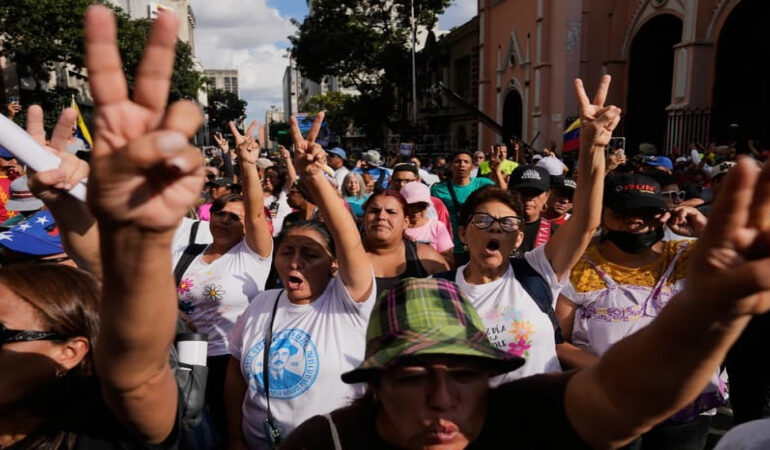

Venezuela saw an outpouring of public prayer as thousands gathered in the city of Barquisimeto for the annual procession honoring the Virgin under the title Divina Pastora. The pilgrimage, held each January, drew large crowds at a moment of profound national uncertainty, with many participants framing their presence as both religious devotion and civic concern. Pilgrims walked miles through the city dressed largely in white, carrying images, candles, and rosaries, and stopping at traditional stations before reaching the cathedral. For many, the procession served as a rare moment of collective calm in a country marked by political upheaval, economic strain, and social fatigue. The gathering reflected how religious ritual continues to function as a shared language for expressing hope, grief, and endurance when public life feels unstable and future direction remains unclear.
This year’s procession unfolded against an exceptional political backdrop following the sudden detention of President Nicolás Maduro earlier in January and the rapid reconfiguration of power that followed. While the event itself remained focused on prayer, conversations among pilgrims revealed widespread anxiety about governance, sovereignty, and daily survival. Many participants spoke quietly about peace, stability, and the desire for normalcy rather than partisan outcomes. The procession has long been embedded in the civic identity of Barquisimeto, drawing families across generations, but this year it carried an added weight as Venezuelans sought reassurance beyond political institutions. The blending of spiritual practice and national concern illustrated how faith gatherings often become spaces where citizens process uncertainty without confrontation, relying instead on shared symbols and collective silence.
For individual devotees, the procession also remained deeply personal. Many walked or attended despite illness, age, or physical difficulty, carrying intentions tied to health, family, and livelihood. Longstanding devotion has linked the pilgrimage to stories of perseverance, with participants returning year after year regardless of changing circumstances. In interviews along the route, pilgrims described faith as a companion through decades of hardship, not a solution but a source of strength. The presence of children, elderly relatives, and entire households underscored the continuity of the tradition even as the country itself undergoes disruption. This persistence reflects how religious identity in Venezuela often operates independently of political cycles, offering a sense of belonging that endures when other structures feel unreliable.
The scale of the procession reaffirmed the Church’s role as a stabilizing presence in Venezuelan society, particularly during moments when public trust is strained. Without issuing political statements, the event conveyed a collective appeal for peace and dignity rooted in shared belief rather than ideology. As Venezuela navigates an uncertain path forward, such gatherings highlight how religious ritual continues to provide space for reflection and unity. The procession did not resolve questions surrounding leadership or governance, yet it demonstrated the enduring capacity of faith to gather people without demanding answers. In a climate defined by rapid change and unresolved tension, the walk through Barquisimeto stood as a quiet assertion that hope, for many Venezuelans, is still articulated through prayer and shared presence.