
Vietnamese Catholic Church Sees Strong Vocation Growth While Urging Deeper Missionary Formation
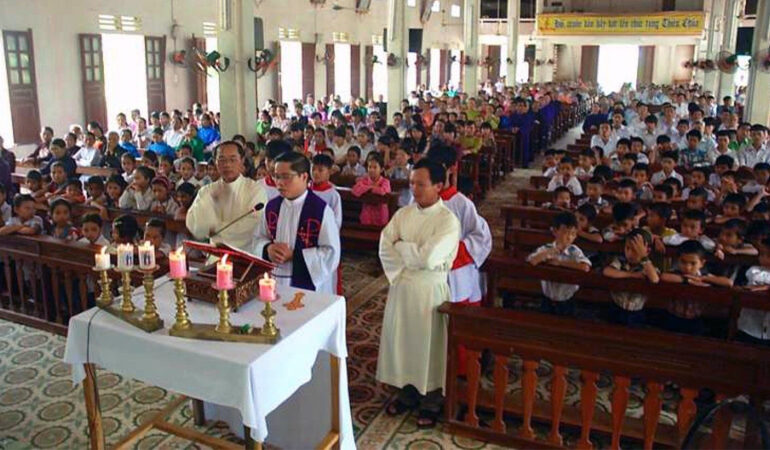

The Catholic Church in Vietnam continues to experience remarkable growth in priestly and religious vocations, but Church leaders and commentators are increasingly emphasizing that numerical strength must be matched with renewed missionary formation. At the beginning of the year, the Church in Vietnam ordained 76 transitional deacons, most of whom are expected to be ordained as priests within the next year.
The newly ordained deacons come from multiple dioceses across the country’s 27 dioceses, as well as from a wide range of its 83 male religious congregations. Their ordination reflects what many describe as the enduring vitality of Catholic life in Vietnam, where vocations to the priesthood and consecrated life continue to flourish despite social and pastoral challenges.
Vietnam’s contribution to the global Church is also visible beyond its borders. In the United States, Church records indicate that roughly 12 percent of seminarians are of Vietnamese origin, with an estimated 400 to 500 Vietnamese priests currently serving in parishes and institutions across the country. This global presence has reinforced Vietnam’s reputation as a strong source of vocations for the universal Church.
For years, the Church in Vietnam has been described as a “vocation basket,” producing large numbers of priests and religious men and women. Current estimates suggest the country has around 6,000 priests and nearly 31,000 religious serving a Catholic population of approximately seven million. While these figures are widely admired, Church leaders acknowledge that they also raise important questions about pastoral balance and missionary focus.
One of the central concerns is uneven pastoral distribution. Observers note that urban parishes often have multiple priests assigned to a single community, where ministry can become focused on administration, liturgical celebrations, and parish infrastructure. Meanwhile, remote areas such as the Central Highlands and northwestern regions face acute shortages of clergy. In these areas, many ethnic minority communities may wait months for the celebration of Mass, with priests traveling long distances across difficult terrain to serve small and often impoverished congregations.
Catholic commentators have stressed that this imbalance highlights the need to form priests not only as parish administrators but as missionaries ready to serve on the margins. They argue that while Vietnam’s seminary formation is academically rigorous, lasting close to a decade, it must be complemented by sustained missionary training rooted in service, simplicity, and closeness to the people.
This vision echoes the pastoral emphasis often articulated by Pope Francis, who has repeatedly called clergy to remain close to the faithful and attentive to their daily struggles. For the Vietnamese context, this means formation that prioritizes missionary spirituality, cultural sensitivity, and engagement with diverse communities, including learning local languages and participating in social and charitable initiatives.
In response, the Vietnamese bishops have announced a three year pastoral program focused on missionary renewal. The year 2026 has been designated as the Year of Every Christian as a Missionary Disciple, followed by initiatives aimed at strengthening missionary communities and encouraging the Church in Vietnam to go forth with renewed evangelizing energy.
Church leaders emphasize that abundant vocations are a gift meant to be shared. By deepening missionary formation and fostering a spirit of service, they hope Vietnam’s growing number of clergy will become a source of renewal not only at home, but throughout the wider Church.