

Washington Court Allows Subpoena of Seattle Archdiocese in Abuse Investigation
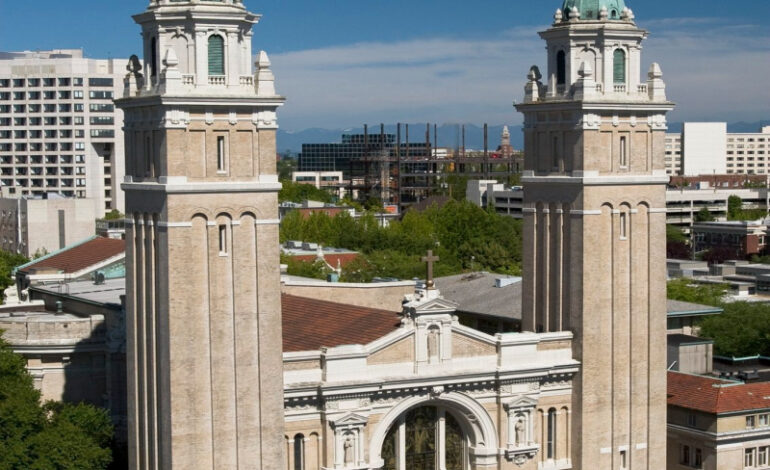

A Washington state appeals court has ruled that the state attorney general may subpoena religious organizations, including the Archdiocese of Seattle, for documents related to sexual abuse allegations as part of an investigation into whether charitable funds were used to conceal misconduct.
The ruling, issued on March 2 by the Court of Appeals Division I, reversed a previous 2024 decision that had blocked the attorney general from compelling the archdiocese to produce certain records. The three judge panel concluded that the subpoena can be enforced under Washington’s Charitable Trust Act, but only within specific limits tied to the investigation of alleged criminal or civil wrongdoing.
Judge Ian Birk, writing in the court’s opinion, stated that the subpoena may be enforced when it seeks evidence connected to potential criminal or tortious acts, including cases involving alleged sexual abuse by clergy. However, the ruling also emphasized that investigators cannot use the subpoena to examine the broader religious operations or internal spending decisions of the archdiocese when those matters fall within constitutionally protected religious activity.
The court explained that the legal dispute centers on determining where the boundary lies between legitimate state oversight and the protection of religious freedom. The judges noted that a superior court would likely need to work with both sides to establish the precise limits of the subpoena and clarify which records can legally be requested.
The case originates from a July 2023 subpoena issued by Washington’s then attorney general Bob Ferguson. The request targeted the Archdiocese of Seattle as well as the dioceses of Spokane and Yakima. The investigation was launched to determine whether charitable funds held by these dioceses may have been used to conceal sexual abuse allegations or related misconduct.
Under Washington law, the dioceses operate as corporations sole, meaning they hold assets in trust for both religious and charitable purposes. Investigators argued that this legal structure allows the state to review certain financial activities under laws governing charitable trusts.
Initially, the dioceses responded to the request by providing publicly available information. However, state officials later issued additional subpoenas in April 2024 seeking more detailed financial and accounting records. The attorney general’s office subsequently filed a lawsuit against the Archdiocese of Seattle in May 2024, alleging that the archdiocese had declined to fully comply with the request.
Church officials challenged the subpoena, arguing that its scope was excessively broad and would require the production of decades of records dating back to 1940. In 2024 a King County Superior Court judge ruled in favor of the archdiocese, determining that the attorney general did not have the authority to compel the release of the requested documentation.
The attorney general’s office appealed that decision, prompting the appellate court to reconsider how the Charitable Trust Act applies to religious organizations. In its decision, the appeals court concluded that the law permits the state to seek evidence related to potential wrongdoing involving charitable funds but cannot be used to intrude into areas protected by religious liberty.
Following the ruling, Archbishop Paul Etienne addressed members of the archdiocese in a letter to the faithful. He stated that the archdiocese shares the same objective as state authorities in preventing abuse and supporting healing for victims. At the same time, he emphasized the importance of protecting the privacy of victim survivors while maintaining transparency.
Ferguson, who now serves as governor of Washington, described the ruling as an important step toward transparency. Church leaders have expressed willingness to continue discussions with state officials to determine which records can be provided while respecting legal and pastoral responsibilities.