

Why Doctrinal Continuity Matters More Than Innovation for Global Catholics
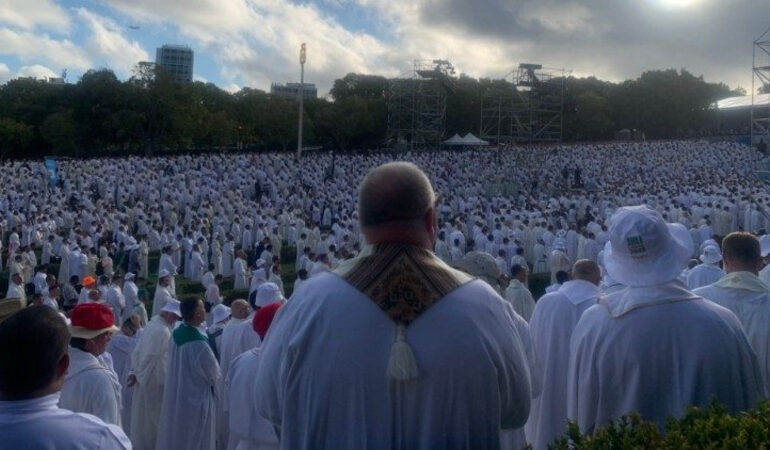

The global Catholic community spans cultures, languages, and social systems that differ widely in their daily realities. In such diversity, expectations often emerge for constant adaptation and innovation in how the Church communicates its teachings. Yet the Vatican continues to emphasize doctrinal continuity as a priority. This choice reflects an understanding that continuity, rather than frequent innovation, provides the stability necessary for a worldwide faith.
Doctrinal continuity ensures that Catholics across continents share a common moral and theological framework. While pastoral expressions may differ, the underlying teaching remains consistent. This consistency allows the Church to function as a unified body rather than a collection of localized interpretations shaped by cultural trends.
Continuity as the Basis of Unity
The most important reason doctrinal continuity matters is its role in sustaining unity. A global Church cannot depend on constant innovation without risking fragmentation. Shared doctrine provides a common reference point that transcends geography and culture.
By maintaining continuity, the Church ensures that its teachings are recognizable and reliable. Catholics in different regions can engage with the same core beliefs even when their social contexts differ. This unity strengthens the Church’s ability to speak with one voice on fundamental moral and theological questions.
Stability in a Rapidly Changing World
The modern world is characterized by rapid social and technological change. In such an environment, institutions that continuously redefine their core principles often lose credibility. Doctrinal continuity offers stability amid uncertainty.
For global Catholics, this stability provides reassurance. Teachings do not shift in response to each cultural moment. Instead, they remain grounded in a tradition that has endured across centuries. This endurance reinforces trust and allows faith to function as an anchor rather than a variable.
Distinguishing Pastoral Adaptation From Doctrinal Change
Another critical distinction is between pastoral adaptation and doctrinal innovation. The Church recognizes the need to address new circumstances pastorally while preserving the integrity of doctrine. Continuity does not imply rigidity, but it does set boundaries for adaptation.
Pastoral approaches may evolve to meet local needs, but doctrinal foundations remain constant. This distinction allows the Church to remain responsive without compromising coherence. Innovation is applied to methods, not to the substance of belief.
Protecting Credibility Across Cultures
Doctrinal continuity also protects the Church’s credibility across diverse cultures. In regions where rapid change is viewed with suspicion, frequent doctrinal innovation can undermine trust. Continuity signals reliability and seriousness.
By holding to consistent teaching, the Church avoids appearing reactive or inconsistent. This credibility is essential for a global institution that seeks to engage societies at different stages of social development. Continuity ensures that moral guidance is perceived as principled rather than negotiable.
Innovation as a Supportive, Not Defining, Element
Innovation still has a role within the Church, but it functions in support of continuity rather than replacing it. New forms of communication, education, and pastoral outreach can enhance engagement without altering doctrine.
This hierarchy ensures that innovation serves mission rather than redefining belief. By placing continuity at the center, the Church maintains control over its identity while remaining open to practical improvement. Innovation becomes a tool rather than a driver of doctrinal change.
A Global Faith Requires Enduring Foundations
A faith that spans generations and cultures requires foundations that do not shift with each era. Doctrinal continuity provides those foundations. It allows the Church to pass on teaching with confidence that it will remain relevant across time.
For global Catholics, this continuity creates a sense of belonging to something larger than immediate circumstances. Faith is experienced as participation in a living tradition rather than adherence to a constantly changing framework.
Conclusion
Doctrinal continuity matters more than innovation for global Catholics because it sustains unity, stability, and credibility across diverse cultures. By preserving consistent teaching while allowing pastoral adaptation, the Church ensures that faith remains grounded and enduring. This balance allows Catholic belief to remain coherent in a rapidly changing world.