
Why Pope Leo XIV Is Emphasizing Institutional Stability in His First Year
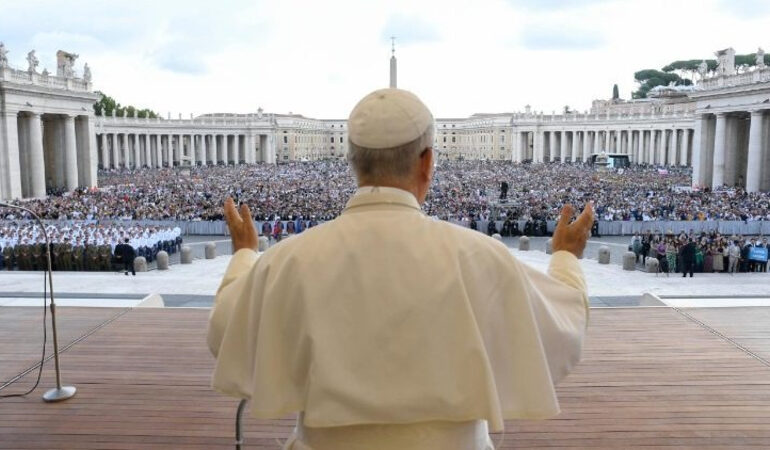

The first year of a new papacy often invites speculation about sweeping reforms, dramatic gestures, and visible shifts in tone. Yet under the leadership of Pope Leo XIV, the Vatican has moved in a noticeably different direction. Rather than prioritizing high-profile change, the new pope has focused on reinforcing institutional stability across the Church’s global structure.
This approach reflects a clear reading of the moment the Church finds itself in. After years of internal reform, external pressure, and global uncertainty, Pope Leo XIV appears intent on consolidating governance, clarifying authority, and restoring predictability to Vatican operations. Stability, in this context, is not resistance to progress but a foundation for it.
Institutional Stability as a Strategic Priority
At the heart of Pope Leo XIV’s early leadership is a belief that strong institutions are essential for credible moral authority. The Vatican operates not only as a spiritual center but also as a global administrative body overseeing dioceses, diplomatic relations, and humanitarian initiatives. Disruption within these systems can weaken the Church’s ability to act consistently and speak clearly.
By emphasizing institutional continuity, the pope is signaling that coherence matters as much as vision. Early decisions have shown restraint, with few abrupt changes to existing structures. This steadiness allows bishops, clergy, and lay leaders to operate within known frameworks, reducing uncertainty at a time when the global Church faces complex social and political challenges.
The focus on stability also reassures external partners. Governments, interfaith organizations, and international bodies rely on predictable Vatican engagement. A stable institutional posture strengthens the Holy See’s role as a reliable diplomatic and moral actor on the world stage.
A Measured Transition After a Period of Change
The Vatican has experienced significant internal shifts over the past decade, particularly in governance, financial oversight, and communications. Pope Leo XIV has inherited these reforms at a stage where consolidation is necessary. Rather than introducing new layers of change, his leadership suggests a period of assessment and normalization.
This measured transition helps prevent reform fatigue within the Church. Clergy and administrators need time to adapt to existing changes before additional adjustments can be effective. By slowing the pace, the pope allows reforms to take root and function as intended, reducing internal friction.
Such an approach also reflects pastoral sensitivity. Stability within Church institutions supports stability within local communities, where uncertainty at the center often filters down to parishes and dioceses.
Governance Before Grand Gestures
Unlike papacies that have relied on symbolic acts to set their tone, Pope Leo XIV has chosen governance as his primary signal. Early appointments and internal directives have emphasized competence, continuity, and administrative clarity. This sends a message that the day-to-day functioning of the Church matters deeply.
Governance-focused leadership may attract less public attention, but it strengthens the Church’s internal resilience. Clear roles, defined processes, and disciplined decision-making reduce the risk of crisis-driven reactions. Over time, this builds trust among Church leaders and the faithful alike.
This emphasis also aligns with a broader understanding that institutional health supports spiritual mission. When governance is stable, pastoral initiatives and doctrinal teaching can proceed without distraction.
Responding to a Fragmented Global Church
The Catholic Church today spans diverse political systems, cultures, and social realities. Pope Leo XIV’s emphasis on institutional stability reflects an awareness of this diversity. A fragmented global environment requires a strong central framework that can accommodate difference without losing unity.
By reinforcing Vatican institutions, the pope is strengthening the connective tissue that holds the global Church together. Stability at the center allows local churches to navigate their unique challenges while remaining aligned with shared values and teachings.
This approach avoids imposing uniform solutions while still maintaining coherence. It recognizes that unity is sustained not by constant change, but by dependable structures that allow dialogue and discernment to unfold responsibly.
Conclusion
Pope Leo XIV’s first year suggests a papacy shaped by caution, clarity, and institutional confidence. By prioritizing stability, he is not delaying progress but preparing the Church for sustainable leadership in a complex world. His focus on governance, continuity, and measured transition reflects a belief that strong institutions remain essential to the Church’s spiritual and global mission.