


Why the Vatican Is Reasserting Central Coordination After Years of Decentralization


Over the past decade, the Vatican has operated within a broader movement toward decentralization. Local churches were encouraged to exercise greater pastoral discretion, and decision-making authority was often framed as closer to regional realities. While this shift aimed to respect diversity within the global Church, it also introduced new challenges of coordination, clarity, and consistency.
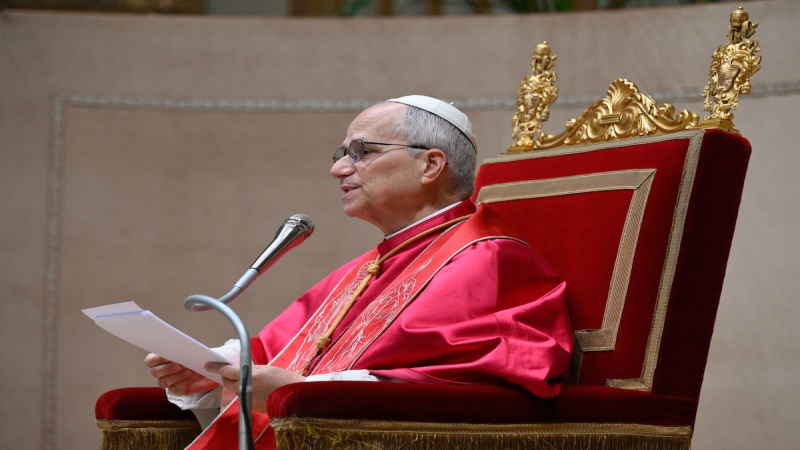
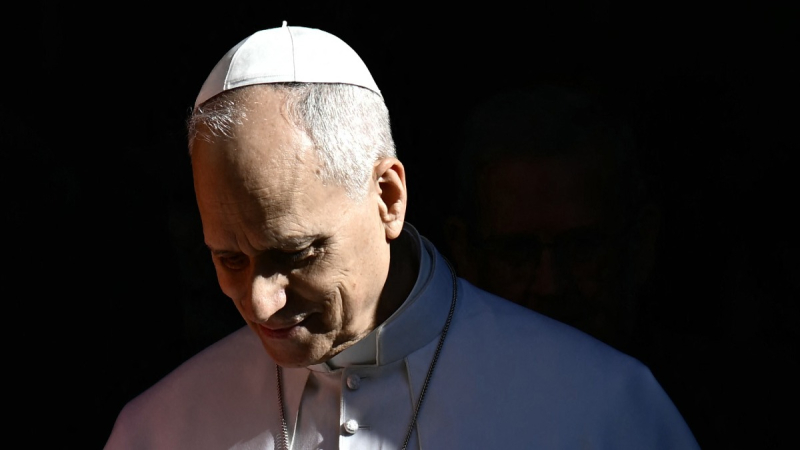
As the Church enters a new phase under Pope Leo XIV, signs point to a renewed emphasis on central coordination. This does not represent a rejection of local responsibility but rather an effort to restore balance between autonomy and institutional coherence. The Vatican’s recalibration reflects practical lessons learned from years of decentralized governance.
Restoring Coherence in a Global Institution
The Catholic Church is one of the most globally distributed institutions in the world. With that scale comes the need for shared frameworks that ensure unity of mission and governance. Over time, decentralization created situations where policies, interpretations, and administrative practices varied widely across regions.
Reasserting central coordination allows the Vatican to clarify expectations and reduce fragmentation. This is particularly important in areas such as governance standards, disciplinary procedures, and institutional accountability. A clearer center helps prevent conflicting approaches that can weaken the Church’s collective credibility.
Central coordination also supports smaller or less-resourced dioceses. When guidance from Rome is consistent and structured, local churches can operate with greater confidence, knowing they are aligned with a broader institutional direction.
Lessons from Decentralized Governance
Decentralization brought valuable insights into local pastoral needs, but it also exposed limitations. In some cases, uneven implementation of policies led to confusion among clergy and the faithful. Without clear central reference points, local decisions were sometimes interpreted as doctrinal or institutional divergence.
The Vatican’s current shift reflects an understanding that decentralization works best when anchored by strong coordination. Autonomy without structure can create uncertainty, especially during moments of crisis or controversy. Central oversight helps ensure that local initiatives remain connected to the Church’s universal mission.
This reassessment is pragmatic rather than ideological. It acknowledges that governance systems must adapt when outcomes reveal gaps or inefficiencies. Strengthening coordination is a response to experience, not a reversal of principle.
Administrative Efficiency and Accountability
Another driver behind renewed central coordination is administrative efficiency. The Vatican oversees complex financial, legal, and operational systems that require consistent standards. Fragmented oversight can complicate transparency and slow decision-making.
By reinforcing central coordination, the Vatican improves its ability to monitor processes, implement reforms, and respond to challenges. Clear reporting lines and shared procedures reduce duplication and ambiguity. This is particularly important in areas where accountability has been under public scrutiny.
Central coordination also supports long-term planning. When data, strategy, and policy are aligned at the center, the Church can allocate resources more effectively and anticipate future needs with greater accuracy.
Navigating Global Pressure and External Scrutiny
The Church operates within an environment of increasing external scrutiny, from governments, media, and civil society. Inconsistent messaging or governance approaches across regions can amplify criticism and create misunderstandings.
A more coordinated center allows the Vatican to present a unified institutional voice. This does not silence local perspectives but ensures that external engagement reflects shared principles and agreed positions. Consistency strengthens credibility, especially in diplomatic and legal contexts.
This approach also protects local churches. Clear guidance from Rome can shield dioceses from pressure to act independently on matters with global implications. Central coordination provides a framework within which local leaders can navigate complex environments more securely.
Balancing Authority and Pastoral Flexibility
Reasserting central coordination does not mean eliminating pastoral flexibility. Instead, it seeks to define the boundaries within which flexibility operates. The Vatican’s role is to establish common ground, allowing diversity of practice without undermining unity.
This balance is essential for a global Church facing diverse cultural and social realities. Strong coordination ensures that adaptation does not become fragmentation. It preserves the sense of belonging to a shared institution while respecting local context.
Under this model, central authority serves as a reference point rather than a constant intervention. It supports local decision-making by providing clarity, not by replacing it.
Conclusion
The Vatican’s renewed emphasis on central coordination reflects a maturing understanding of governance in a global Church. After years of decentralization, the need for coherence, efficiency, and accountability has become clear. By strengthening coordination at the center, the Vatican aims to support unity without suppressing diversity, ensuring that the Church remains institutionally resilient in a complex world.