

Why the Vatican’s Social Voice Still Shapes Global Moral Debate in 2026
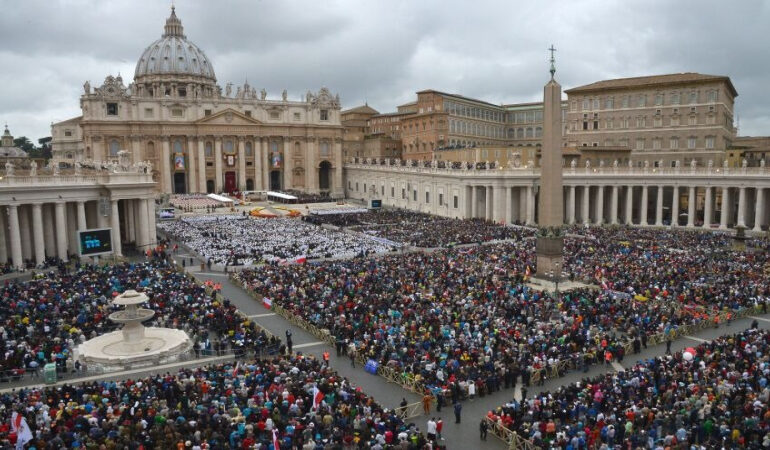

Across much of the Western world, traditional religious authority has receded from public life. Yet in 2026, the Vatican continues to influence global moral debate in ways that remain difficult to ignore. Its voice persists not through political power or enforcement, but through its ability to articulate ethical concerns that resonate beyond the Catholic community.
This influence reflects a shift in how moral authority functions in pluralistic societies. The Vatican no longer speaks primarily as a commanding institution, but as a moral interlocutor. Its statements often enter public discourse not as final answers, but as framing devices that shape how societies discuss human dignity, responsibility, and the common good.
Moral Authority Without Coercion
One of the Vatican’s defining strengths today lies in its ability to operate without coercive power. In a world wary of institutional dominance, moral persuasion has proven more effective than directive authority. Vatican interventions on global issues tend to emphasize shared human values rather than confessional obligations.
By grounding its arguments in universal concepts such as human dignity and solidarity, the Vatican positions itself as a moral reference point. This allows its voice to circulate within secular policy debates, academic forums, and civil society discussions. The absence of enforcement power has paradoxically increased its credibility among diverse audiences.
This form of influence reflects an awareness of contemporary social dynamics. Moral leadership in 2026 is less about commanding agreement and more about shaping conscience through reasoned appeal.
Engagement With Contemporary Social Issues
The Vatican’s engagement with issues such as migration, poverty, technological ethics, and armed conflict continues to draw attention because of its human-centered framing. Rather than offering technical solutions, it highlights the ethical implications of policy choices and economic systems.
On migration, the focus remains on the human cost of displacement rather than abstract statistics. In discussions on technology, the emphasis is placed on human agency and responsibility rather than innovation alone. This consistent ethical lens allows Vatican perspectives to remain relevant even in highly specialized debates.
Such engagement reflects an understanding that moral discourse must intersect with lived experience. By speaking to the human consequences of social decisions, the Vatican ensures its voice remains accessible and resonant.
Dialogue as a Strategic Choice
In 2026, Vatican communication increasingly favors dialogue over proclamation. Statements are often framed to invite conversation rather than impose conclusions. This approach aligns with a broader cultural shift toward participatory discourse in public life.
By addressing policymakers, scholars, and social leaders simultaneously, the Vatican positions itself within networks of influence rather than above them. This strategy acknowledges that moral consensus in pluralistic societies emerges through engagement, not decree.
Dialogue also allows the Vatican to remain present in spaces where religious language alone may be insufficient. Ethical reasoning expressed in broadly human terms enables collaboration across ideological and cultural boundaries.
Cultural Relevance in a Secular Age
The persistence of the Vatican’s social voice challenges assumptions about the decline of religious relevance. While institutional affiliation may be decreasing in some regions, ethical questions rooted in human dignity remain central to public life. The Vatican’s ability to articulate these concerns ensures continued relevance.
This relevance is reinforced by historical continuity. The Vatican draws upon centuries of social thought while adapting its language to contemporary contexts. This balance between tradition and adaptation allows it to speak credibly to both faith communities and secular audiences.
In many respects, the Vatican functions as a moral archive that remains actively engaged with the present. Its social voice endures because it evolves without abandoning its foundational principles.
Conclusion
In 2026, the Vatican’s influence on global moral debate stems not from authority imposed, but from ethics articulated with clarity and restraint. By engaging society through dialogue, human-centered reasoning, and cultural awareness, it continues to shape how the world discusses its most pressing moral questions. Its voice remains influential precisely because it seeks to persuade rather than command.