Young Christian Voices Call for Unity Beyond Divisions
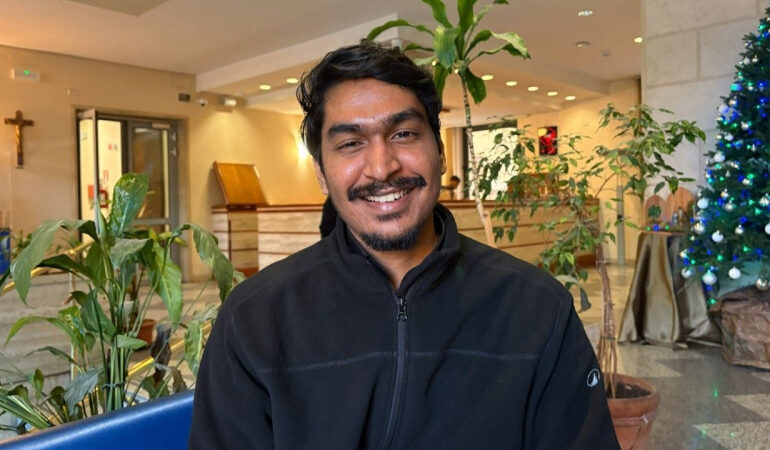

During the Week of Prayer for Christian Unity in Rome, the lived experience of ecumenism took visible form as Christians from multiple traditions gathered for prayer, dialogue, and shared reflection. Among them was Abel Punnoose, a 29 year old Christian from India and a member of the Believers Eastern Church, visiting Rome as part of a delegation from the Bossey Ecumenical Institute. For participants, the week was not limited to symbolic gestures but unfolded as an immersion into the daily life of the Catholic Church, including encounters with Church leaders and moments of common prayer. Abel described the experience as an opportunity to confront differences honestly while remaining focused on what unites Christians. In a city shaped by centuries of Christian history, unity was presented not as an abstract ideal but as a demanding and intentional practice rooted in encounter, patience, and mutual respect.
Abel explained that Bossey is distinctive because ecumenism there is lived rather than merely studied. Students from diverse traditions and cultures share academic work alongside prayer and everyday life, making differences immediately apparent but also gradually less divisive. Over time, he noted, common faith and shared commitment to Christ become more visible than denominational boundaries. Prayer plays a decisive role in this process, offering a space where unity is nurtured through spiritual life rather than negotiation alone. The journey, he acknowledged, is not without tension, yet sustained commitment allows trust to grow. This lived ecumenism, he suggested, offers a model for Christian communities elsewhere, demonstrating that unity is not achieved through uniformity but through fidelity, humility, and perseverance in relationship.
The significance of Christian unity, Abel argued, extends well beyond internal Church concerns. Drawing on reflections from the leadership of the World Council of Churches, he pointed to the challenge facing a divided Christianity in a divided world marked by conflict, inequality, and fear. In such contexts, Christian credibility depends on visible unity expressed through compassion, justice, and solidarity with those who suffer. Issues such as migration, persecution, and economic hardship demand a common response that transcends denominational lines. Abel stressed that Christian witness weakens when internal divisions dominate, while unity becomes a form of proclamation in itself. Living the values of God’s Kingdom, he said, requires Christians to move beyond comfort and act together in service of the vulnerable.
These convictions are deeply shaped by Abel’s experience in India, where Christianity has ancient roots yet remains a minority presence marked by internal divisions. He spoke candidly about the persistence of caste based injustice within Christian communities, describing it as a serious obstacle to credible witness. While acknowledging the Church’s long engagement in education and social service, he emphasized that younger generations carry responsibility for addressing unresolved injustices. Ecumenism, in his view, must also involve a more balanced exchange between global regions, recognizing the spiritual and cultural gifts of the Global South alongside material needs. A defining moment of the week came during an encounter with Pope Leo XIV, whose personal humility left a lasting impression. For Abel, such gestures embody the spirit of unity that, even in small steps, creates lasting ripples.