



Climate Forum Highlights Human Behavior and Urban Design as Key Drivers of Sustainable Future

Discussions at the GreenAccord International Forum in Italy have brought renewed attention to the deeper causes behind global inaction on climate change, with experts arguing that both human behavior and the design of living spaces play a critical role in shaping outcomes. The event gathered economists, architects, and policymakers to examine why progress often lags despite widespread awareness of environmental risks. Participants emphasized that the challenge is not only technological but also cultural, rooted in how people think, make decisions, and interact with the environments they inhabit every day.
Economist Luciano Canova explained that one of the main obstacles lies in human psychology, particularly the tendency to prioritize immediate concerns over long term consequences. He noted that people often struggle to act on issues that feel distant in time or location, even when the risks are well understood. Climate change, he said, represents a complex mix of cognitive biases that limit effective decision making. When the impacts are projected decades into the future or occur in distant regions, individuals find it harder to connect emotionally, making it easier to delay action or underestimate urgency.
Canova also pointed to the way climate data is communicated as a factor influencing public response. He argued that messages often focus heavily on how far the world is from meeting environmental targets, which can lead to discouragement rather than motivation. By contrast, highlighting achievable progress and incremental improvements could encourage greater engagement. He stressed that individuals need to feel their actions matter, otherwise the scale of the crisis may lead to a sense of helplessness. At the same time, he emphasized that responsibility cannot fall solely on individuals, calling for coordinated political and institutional action.
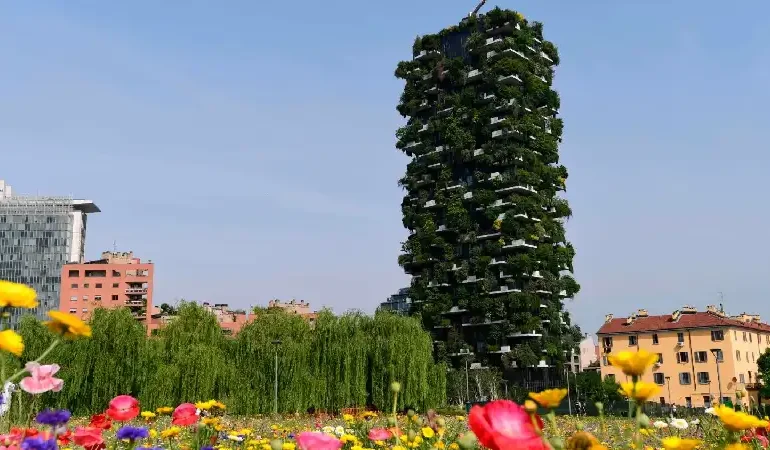
Architect Martin Haas offered a complementary perspective by focusing on the physical spaces people inhabit and how these influence behavior. He argued that architecture is not neutral but actively shapes how individuals interact with each other and with their environment. From the materials used in construction to the layout of shared spaces, design choices can encourage more sustainable habits or reinforce patterns of consumption. According to Haas, the current moment presents an opportunity to rethink how buildings are conceived, moving away from excess toward more thoughtful and efficient use of resources.
Haas highlighted examples of bio architecture that prioritize simplicity, natural materials, and passive energy solutions. One such project used compacted earth as a primary building material, receiving strong positive feedback from users who reported becoming more aware of their own environmental impact. He suggested that small levels of discomfort, such as reduced reliance on artificial climate control, can increase awareness and lead to behavioral change. For him, sustainability begins with questioning necessity itself, asking whether new construction is required or whether existing resources can be used more effectively.
Another key idea discussed was the importance of shared spaces in urban environments. Haas pointed to growing demand for non commercial areas where people can connect without the expectation of spending money. These shared environments, along with features like improved air quality and human scale design, can foster stronger community ties and reduce resource consumption. He also noted that traditional building practices often reflected local climates and needs more closely, suggesting that revisiting past approaches could offer valuable insights for modern sustainability challenges.
The forum highlighted that addressing climate change requires a combined shift in mindset and infrastructure, bringing together behavioral change and design innovation. Experts agreed that while technological solutions remain important, lasting progress depends on aligning human habits with the environments people create. By bridging the gap between how people think and how societies build, participants suggested that a more sustainable and socially connected future remains achievable if action is taken collectively and with long term vision.