
Filipino Migrant Chorale Brings Faith and Cultural Identity to Global Stage Through Sacred Music
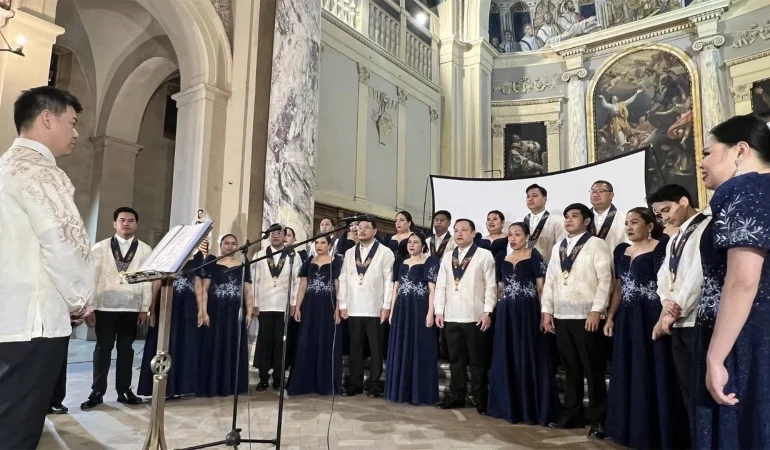

A Filipino choral group based in London is drawing attention across Catholic communities for its unique mission of blending faith, culture, and music, offering a powerful expression of spiritual identity among migrants. The Sinag Himig Chorale London has become a symbol of unity and devotion, particularly during the Holy Week season, where its performances serve both liturgical and cultural purposes. Through sacred music rooted in Filipino tradition, the group provides a sense of belonging for overseas communities while reinforcing the global presence of Catholic spirituality shaped by migration and shared faith experiences.
Formed in 2021, the chorale began as a small initiative for a fundraising concert but quickly evolved into a structured ministry that connects Filipino migrants across England. Composed of singers from diverse backgrounds, the group emphasizes service, evangelization, and community building through music. Under the direction of conductor Jarom Pinlac, the choir has expanded its role beyond performances, participating in liturgical celebrations and organizing events that support charitable causes. Its growth reflects the increasing importance of cultural ministries within the Church, particularly among diaspora communities seeking both spiritual and social connection.
The group’s mission extends into international spaces, as demonstrated by its recent performance in Rome at the Basilica di Santa Pudenziana, where it presented a concert centered on faith and identity. This event also marked the introduction of the Mass of San Lorenzo Ruiz, a liturgical composition dedicated to Filipino migrants living abroad. The initiative highlights the importance of culturally rooted worship within the Catholic tradition, allowing communities to experience the Mass in a way that resonates with their heritage. The composition integrates language, devotion, and cultural memory, offering a deeply personal expression of faith for Filipinos worldwide.
Leaders of the chorale emphasize that their work is grounded in ministry rather than performance alone, viewing music as a tool for spiritual connection and outreach. They highlight how sacred songs, including adaptations of traditional prayers, help migrants remain spiritually anchored despite physical distance from their homeland. Members describe their mission as one that strengthens faith and uplifts communities, particularly for those navigating the challenges of living abroad. Their message encourages migrants to remain engaged in prayer, service, and community life, reinforcing the Church’s role as a unifying force across borders.
The experience of migration has shaped the group’s identity, with members reflecting on how distance often deepens spiritual and cultural awareness. Music, in this context, becomes a bridge that connects individuals to their roots while also integrating them into new environments. The chorale’s work illustrates how faith communities adapt to global movement, creating spaces where cultural expression and religious practice coexist. By bringing Filipino spirituality into international settings, the group contributes to the broader narrative of the Church as a universal community enriched by diverse traditions.
Observers note that initiatives like the Sinag Himig Chorale London reflect a growing recognition of migrant contributions to the life of the Church. Their presence highlights the importance of inclusive pastoral approaches that acknowledge the experiences of diaspora populations. As Catholic communities continue to expand across continents, such ministries play a key role in maintaining spiritual continuity while fostering intercultural dialogue. The chorale’s activities demonstrate how music can transcend language and geography, offering a shared experience that strengthens both faith and community bonds.
As the group continues its mission, its impact is being felt not only within Filipino communities but also among wider Catholic audiences who encounter its performances. The chorale stands as an example of how faith based initiatives can adapt to contemporary realities while remaining rooted in tradition. Through its dedication to service and evangelization, it reinforces the enduring role of music within the Church’s spiritual life and highlights the evolving ways in which global communities express and sustain their faith.