

Easter Celebrations Secured at Holy Sepulchre Amid Ongoing Conflict and Restrictions in Jerusalem

Easter celebrations at the Church of the Holy Sepulchre in Jerusalem will proceed following an agreement between Church authorities and Israeli officials, ensuring that one of Christianity’s most sacred observances can continue despite ongoing regional tensions. The Latin Patriarchate of Jerusalem and the Custody of the Holy Land confirmed that arrangements have been finalized to allow liturgies and traditional ceremonies during Holy Week. The development comes at a sensitive time as conflict related restrictions remain in place, requiring adjustments to how worship is conducted both locally and globally.
According to Church officials, coordination with Israeli authorities has secured access for clergy and representatives of various Christian communities to carry out the liturgical schedule. This agreement is seen as essential for preserving centuries old traditions associated with the Holy Sepulchre, widely regarded as the site of Jesus Christ’s crucifixion and resurrection. The resolution follows a recent incident in which senior Church leaders were prevented from entering the site, raising concerns about access to religious spaces during one of the most important periods in the Christian calendar.
The incident involved the Latin Patriarch of Jerusalem and the Custos of the Holy Land, who were reportedly stopped by Israeli police while attempting to enter the church at the beginning of Holy Week. Church representatives described the situation as unprecedented, noting that such a restriction had not occurred in modern history. The event intensified dialogue between religious authorities and state officials, ultimately leading to a coordinated solution that allows ceremonies to proceed while maintaining security measures deemed necessary by local authorities.
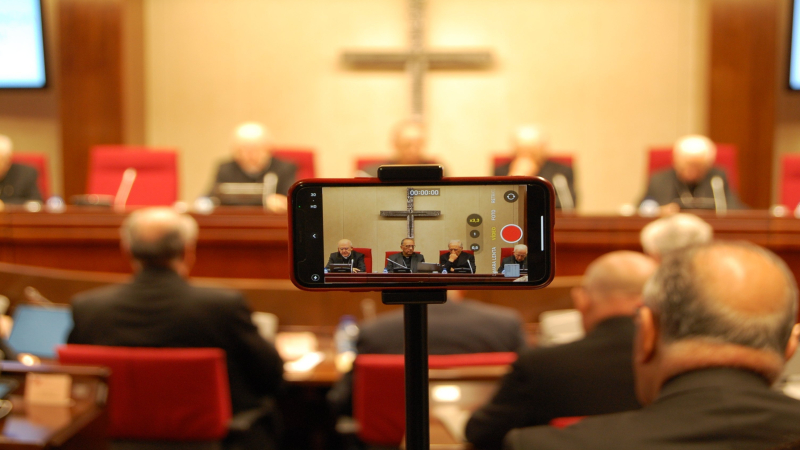
Despite the agreement, limitations on public gatherings remain in effect due to the ongoing conflict, significantly impacting the participation of local worshippers. To address this challenge, Church authorities have announced that liturgies and prayers will be broadcast through live streaming, enabling believers around the world to join spiritually. This approach reflects a broader adaptation within the Church, using digital platforms to maintain connection with the faithful during periods of restricted physical access to sacred sites.
Religious leaders have emphasized the importance of protecting freedom of worship, particularly during times of conflict and instability. In their joint statement, they highlighted that faith remains a shared human value across different religious traditions, including Christianity, Judaism, Islam, and others present in the region. They stressed that safeguarding access to places of worship is not only a religious concern but also a fundamental responsibility that carries global significance, especially in a city as historically and spiritually important as Jerusalem.
Church authorities also acknowledged the role of international and national leaders in facilitating dialogue and supporting the resolution. Expressions of gratitude were extended to officials who intervened to ensure that religious practices could continue under challenging circumstances. The situation underscores the delicate balance between maintaining security and upholding religious rights, particularly in areas affected by prolonged conflict and political sensitivity.
As preparations for Holy Week continue, the Church has reaffirmed its commitment to ongoing dialogue with authorities to ensure that future religious celebrations can be conducted with dignity and accessibility. Leaders have also renewed calls for peace in the region, recognizing the broader humanitarian and spiritual impact of the conflict. The ability to hold Easter ceremonies at the Holy Sepulchre remains a powerful symbol of resilience and faith, even as the wider situation continues to affect daily life and religious practice in Jerusalem.