Lebanon’s Catholics Mark Palm Sunday with Faith and Resilience as War Overshadows Celebrations
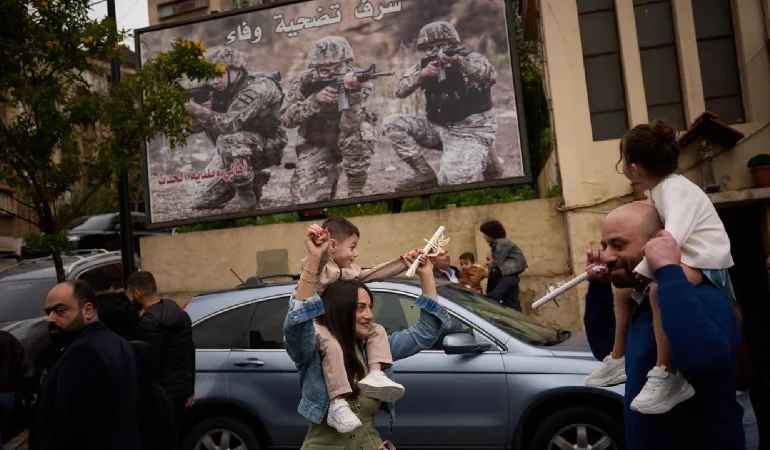

Catholic communities across Lebanon marked Palm Sunday with deep devotion and visible resilience, even as the ongoing conflict between Israel and Hezbollah cast a heavy shadow over the country. Churches in Beirut and southern regions filled with worshippers commemorating the entry of Jesus into Jerusalem, a central moment in the Christian calendar. Despite the tension and uncertainty surrounding daily life, the faithful gathered in large numbers, reflecting a determination to preserve spiritual traditions. The atmosphere blended solemn reflection with quiet hope, as prayers for peace became a central theme throughout the celebrations.
In Beirut’s southern suburbs, areas historically shaped by political and sectarian influence, Palm Sunday processions continued with strong participation, even amid evacuations and ongoing airstrikes nearby. Churches reported standing room only attendance, as families carried palm branches and children participated in processions through streets marked by the realities of conflict. In the southern city of Tyre, where infrastructure damage has created isolation, bells rang out and choral music filled historic churches, offering a moment of spiritual refuge for those enduring the hardships of war.
The celebrations carried a deeper meaning this year, as worshippers navigated the contrast between the message of hope embodied in Palm Sunday and the surrounding instability. Many described the act of attending Mass as both an expression of faith and a form of quiet resistance against fear. The rituals, including the blessing of palm branches and candlelit processions, took on renewed significance, symbolizing endurance and the desire for peace. For many, these moments provided emotional strength, reinforcing the role of faith as a stabilizing force in times of crisis.
Voices from within the congregations reflected a shared sense of vulnerability and unity. Worshippers emphasized that the effects of the conflict extend beyond any single community, affecting all Lebanese regardless of background. Young parishioners spoke of uncertainty about the future, while older generations recalled past conflicts, drawing parallels with earlier periods of instability. Despite these concerns, there was a strong emphasis on maintaining communal bonds and continuing religious practices, even under difficult conditions.
In Tyre, where many residents have remained despite evacuation warnings, the preservation of religious traditions has become a powerful symbol of identity and continuity. Churches that have stood for centuries once again hosted Palm Sunday liturgies, reinforcing the historical presence of Christian communities in the region. Participants described the celebrations as a way of affirming their connection to their land and their faith, even as external circumstances challenge their sense of security.
The broader context of Lebanon’s history adds further depth to the significance of these celebrations. The country’s complex sectarian landscape has long shaped its social and political dynamics, and periods of conflict have repeatedly tested the resilience of its communities. In this environment, religious observances often serve as moments of unity and reflection, bringing people together across divides. The current situation has once again highlighted the role of faith in sustaining hope during times of uncertainty.
As Holy Week continues, Lebanon’s Catholic communities remain focused on prayer, solidarity, and the preservation of their traditions. While the conflict continues to impact daily life, the Palm Sunday celebrations demonstrated a collective commitment to faith and perseverance. The scenes from churches and streets across the country reflect not only the challenges faced by the population but also the enduring strength of spiritual life in the face of adversity.