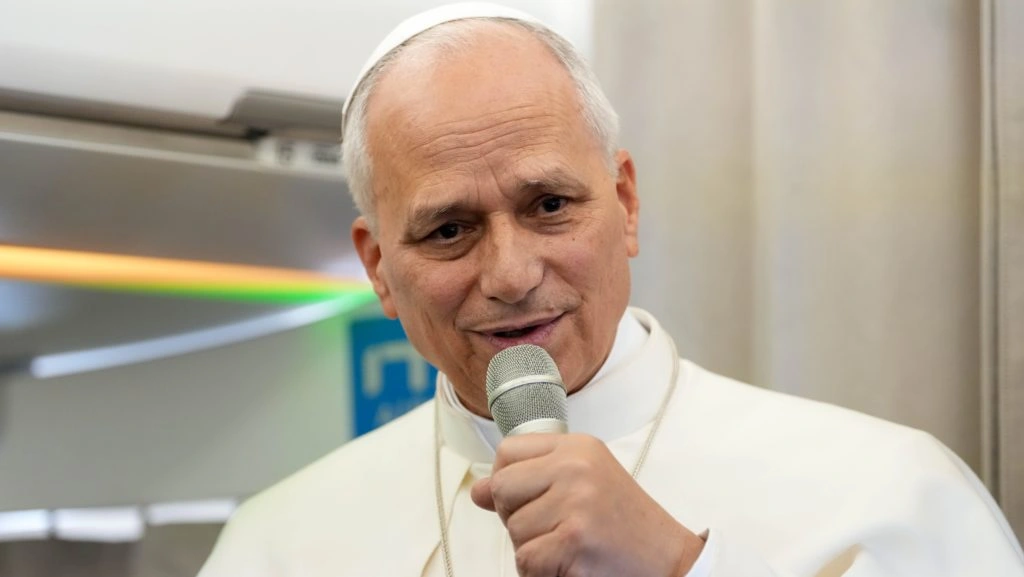

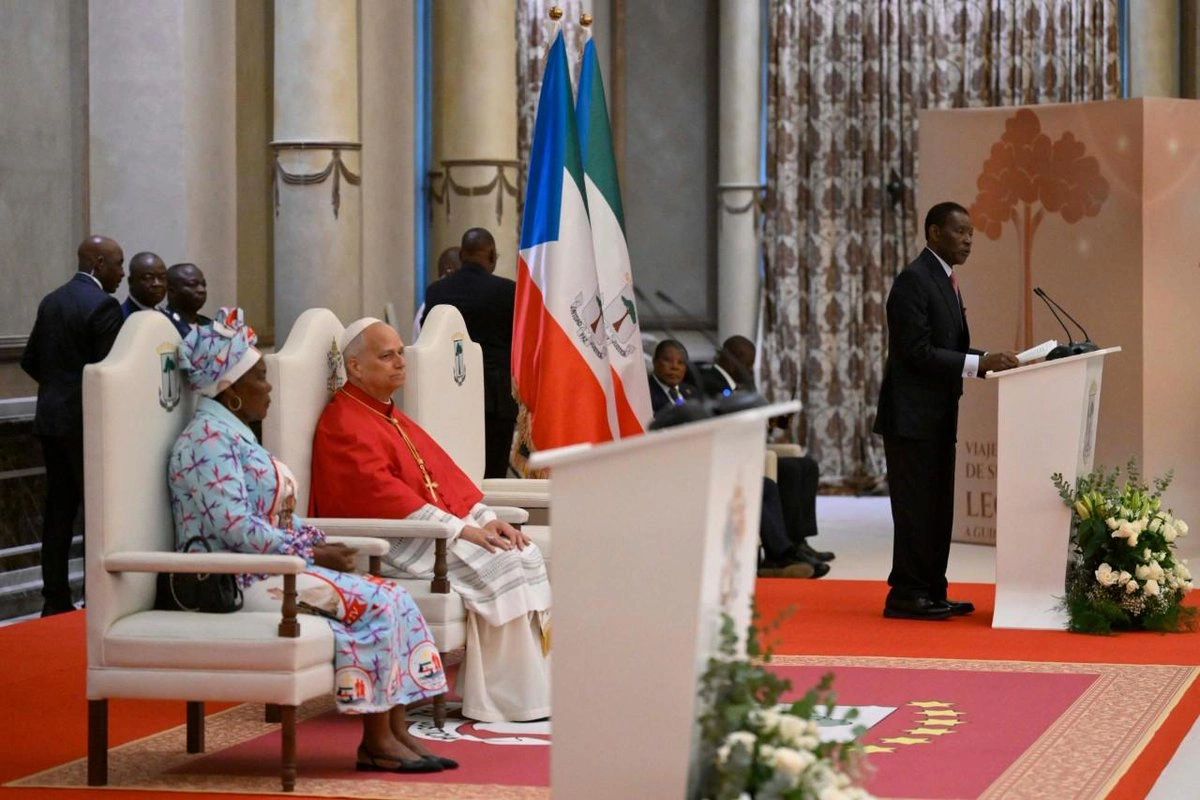
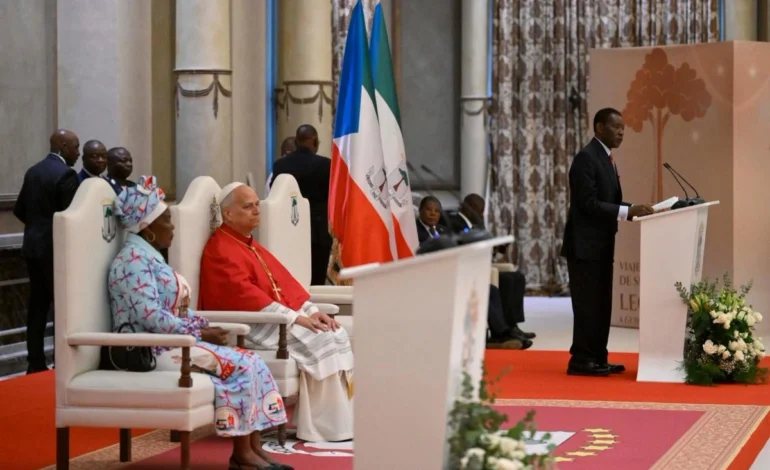

Pope Leo XIV has called on political leaders in Equatorial Guinea to reflect deeply on justice, human dignity and the direction of national development, during his first major public address in the country’s capital Malabo. Speaking before government authorities, civil society representatives and members of the diplomatic corps, the Pope emphasised the importance of building societies that prioritise people over power and shared prosperity over personal or institutional gain. The address marked an important moment in his Apostolic Journey, focusing on governance, responsibility and social cohesion.
The meeting took place shortly after a formal welcome from President Teodoro Obiang Nguema Mbasogo, setting the tone for a diplomatic and pastoral exchange between the Vatican and the Equatorial Guinean state. Pope Leo XIV referenced past papal teaching during his remarks, recalling words from Pope John Paul II delivered during a visit in 1982. In that earlier message, the role of national leadership was described as central to fostering liberty, justice and respect for the rights of every individual, a message the current Pope said remains highly relevant today.
Pope Leo XIV stressed that these principles should continue to guide those entrusted with public authority, particularly in a time when many societies face challenges related to inequality, exclusion and access to opportunity. He urged leaders to ensure that development strategies are not driven solely by economic or political interests but are instead rooted in the wellbeing of all citizens. His remarks highlighted the need for governance that actively protects vulnerable populations and promotes fairness across all levels of society.
The Pope also encouraged dialogue between political institutions and civil society, emphasising that national progress depends on cooperation and mutual understanding. He noted that inclusive development requires listening to a wide range of voices, including those often left at the margins of decision making. By fostering participation and accountability, he said, countries can strengthen trust between institutions and the people they serve, creating a more stable and just social environment.
The address forms part of a wider series of engagements during Pope Leo XIV’s visit to Equatorial Guinea, where he has been focusing on themes of dignity, education, healthcare and social responsibility. His message in Malabo reflects a consistent emphasis throughout his African journey on ethical leadership and human centred development. As his visit continues, further meetings and public events are expected to build on these themes, reinforcing the Vatican’s call for justice oriented governance and social inclusion.