
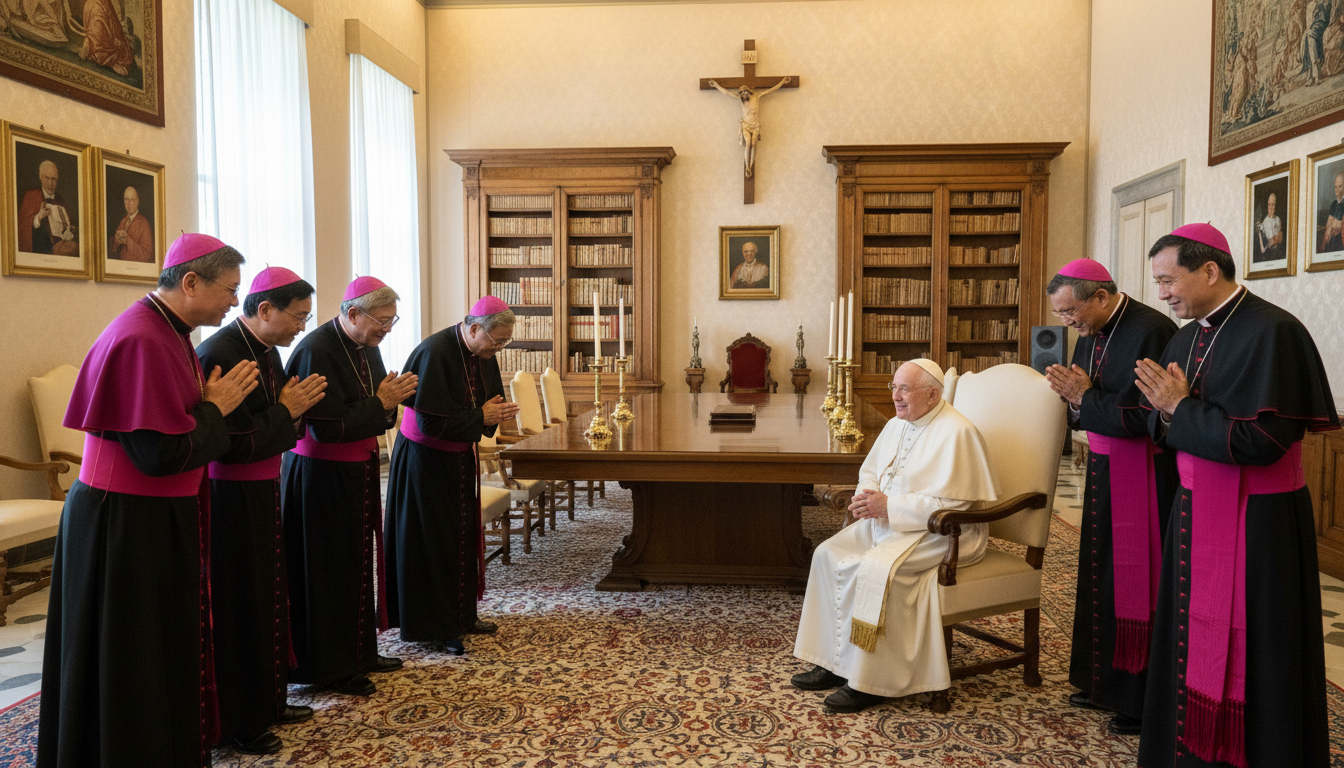





Vatican Observatory’s Latest Honors
The Vatican Observatory is marking a fresh milestone in its public-facing science work, as staff emphasize the practical and symbolic value of celestial naming. In the current cycle of announcements and editorial preparation, the focus has turned to Pope Leo XIII and what the dedication signals about continuity between scholarship and pastoral leadership. Today, officials framing the news have stressed that asteroid names are part of an international process rather than a private honor roll. Live outreach around the announcement has also been used to clarify common misconceptions about how observatories participate. An Update shared alongside the broader communication effort highlights that the recognition is meant to be read as a bridge between historical memory and active research priorities.
The Legacy of Pope Leo XIII
In Vatican communications, the Leo XIII dedication is being treated as a reminder that Catholic engagement with learning has deep institutional roots. The Vatican Observatory points to the pope’s historical reputation for encouraging intellectual work, while keeping the present message grounded in observable, current programs. Midway through the latest briefing materials, Pope Leo XIII is presented as a figure whose name can help audiences connect the Church’s past to an ongoing scientific posture. Today, editors have also leaned on clear language to keep the story from drifting into culture-war framing. Live interviews and an Update cadence have made the point that the commemoration is about how institutions remember, not about rewriting the scientific record.
The Science Behind Naming Asteroids
The mechanics of asteroid naming are being foregrounded as part of the current coverage, particularly for readers tracking Vatican science and its formal relationships with international astronomy. The Vatican Observatory summarized the naming context while pointing audiences to the primary documentation, including Vatican News on the asteroid named for Pope Leo XIII that details the recognition and its framing. In parallel messaging, the team has reiterated that suggested names move through defined review channels rather than informal publicity. Today, the observatory has used Live explainers to underscore that the process is intended to be orderly and nonpartisan. An Update track has clarified that naming does not change an object’s scientific classification.
Significance of Asteroid Nominations
Within the observatory’s current communications strategy, the nomination is being positioned as a way to make specialized work legible without overstating its implications. Vatican Observatory Arizona programs in Tucson are being referenced as a reminder that research and public education are connected across continents and time zones. In the middle of that messaging, Pope Leo XIII is invoked as a recognizable reference point, helping a broader audience follow a technical story without diluting it. Today, spokespeople have also emphasized that recognitions of this kind can encourage younger scholars to see a place for disciplined study inside faith-based institutions. Live engagement has centered on direct explanations rather than slogans. An Update in related coverage also pointed readers toward institutional diplomacy themes via Parolin on Academy, Peace and Papal Diplomacy as a context for how the Vatican communicates across fields.
Future of Vatican’s Astronomical Research
Looking ahead, officials are tying the present announcement to near-term research priorities, including better public translation of technical results and clearer explanations of what observatories do day to day. The Vatican Observatory has also used this moment to address recurring online confusion around the phrase vatican observatory lucifer, noting in Live Q and A sessions that the institution’s work is rooted in standard astronomy and transparent publication practices. In the middle of current planning notes, Pope Leo XIII is again referenced as an emblem for continuity in institutional stewardship, not as a substitute for empirical work. Today, the communications team has said it will continue publishing straightforward materials that separate myth from method. A final Update in the current cycle points readers back to ongoing observing schedules and education programs as the real substance behind the headlines.