
Pope Leo XIV and a lunch with the poor at Castel Gandolfo
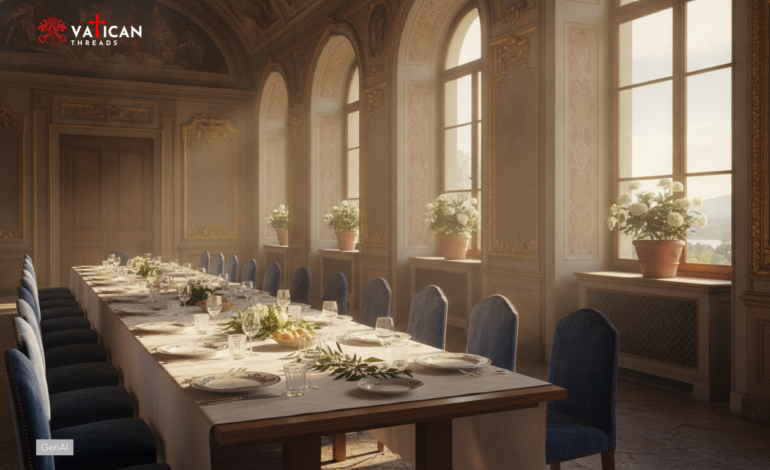
According to Vatican News, Pope Leo XIV met and ate with people experiencing hardship at Castel Gandolfo. In the Vatican News account, Pope Leo XIV’s shared meal is presented as a concrete moment of proximity with people facing difficulties, rather than an abstract appeal. Descriptions about the lunch functioning as a chance to listen without formal barriers reflect how Vatican News framed the encounter, and broader interpretations beyond that reporting should be read as context rather than verified reactions. Organizers were described as aiming for practical support rather than symbolism, though specific local needs (such as food insecurity or unstable housing) were not itemized in the Vatican News report and are therefore best understood as general examples of hardship rather than confirmed details about individual invitees.
How the Castel Gandolfo meal was organized
The meal took place at the Laudato Si Village in Borgo Laudato Si, on the grounds of Castel Gandolfo, as reported by Vatican News. Vatican News said Pope Leo XIV ate alongside people in difficulty and those who accompany them. The Vatican News account is available at Vatican News on the lunch at Castel Gandolfo. Details such as staff “coordinating arrivals, seating, and follow up conversations” are best read as a general description of event logistics unless independently documented; the reporting indicates an emphasis on encounter and accompaniment rather than a staged separation between guests and staff.
Why Pope Leo XIV called fragility a source of strength
According to reported observations by Vatican News, Pope Leo XIV seemed to connect human vulnerability with the need for durable care and accompaniment. Readers tracking household strain through housing shocks may also see the wider context in Portuguese rental policy: Portugal speeds up evictions, and interpreting this as a broader argument about institutions building “reliable networks” is an inference from that framing, not a direct quotation. The choice of setting was also presented in Vatican coverage as linked to the Laudato Si approach, though specific policy outcomes or parish directives were not detailed in the Vatican News item.
Community reactions and coordination after the lunch
Vatican News described the lunch with Pope Leo XIV as an encounter involving people in difficulty and those accompanying them, but it did not publish direct participant quotations in the referenced report. Related reporting on wider Vatican engagement in vulnerable regions can be read in Holy See Africa support targets barriers to development. For that reason, claims about an “unguarded” atmosphere or specific volunteer reactions should be taken as general observations rather than verified testimony. Similarly, phrases said to be “circulating” (including “pope leo xiv magnifica humanitas”) are anecdotal and not sourced in the linked Vatican News story, so they are better treated as unconfirmed chatter rather than a documented refrain.
What this signals for Pope Leo XIV’s next steps
In Vatican reporting, the lunch involving Pope Leo XIV was presented as consistent with themes of accompaniment and sustained attention to people on the margins, though the report does not set out a formal roadmap or measurable targets. For more on that emerging thread, see Pope Leo XIV urges AI for Good dialogue on ethics and Pope Leo XIV AI: Iraq Youth Peace Video Message. References in broader discussion to topics like “pope leo xiv ai encyclical,” “dilexi te pope leo xiv,” or “pope leo xiv bank call” are not substantiated by the Vatican News lunch report and should be understood as general online or media chatter rather than official messaging. As presented in Vatican News, the Castel Gandolfo lunch is best read as a visible example of pastoral proximity rather than proof of specific post-event coordination outcomes.