

Synod Office Publishes First Final Reports on Digital Mission and Priestly Formation
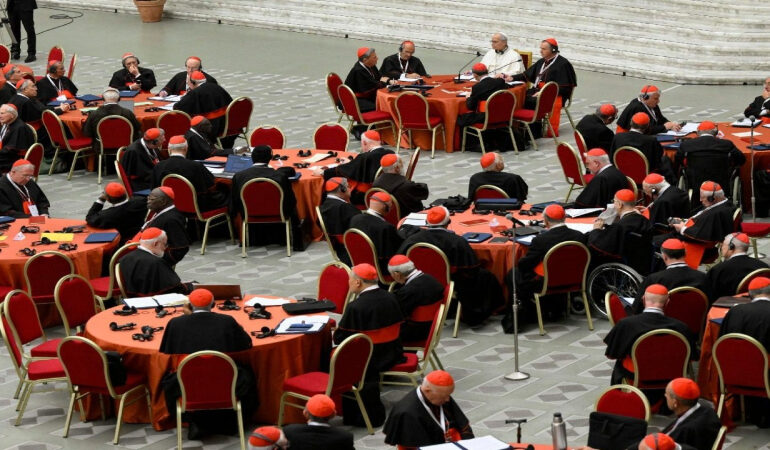

The General Secretariat of the Synod has released the first two Final Reports prepared by Study Groups established after the First Session of the XVI Ordinary General Assembly of the Synod of Bishops. The documents address the Church’s mission in the digital environment and the renewal of priestly formation within a missionary synodal perspective.
The reports of Study Group No. 3 on The Mission in the Digital Environment and Study Group No. 4 on The Revision of the Ratio Fundamentalis Institutionis Sacerdotalis have been published in English and Italian, accompanied by summaries in multiple languages to ensure broader accessibility. Pope Leo XIV directed their release in a spirit of transparency and accountability, inviting the People of God to share in the fruits of reflection and discernment undertaken during the Synod process.
With the presentation of these reports, the mandates of Study Groups No. 3 and No. 4 have formally concluded. The General Secretariat indicated that additional Final Reports from other groups will be released progressively, with the next publication scheduled for 10 March 2026.
Cardinal Mario Grech, Secretary General of the Synod, described the reports as evidence of a shared ecclesial journey. He noted that the collaboration between the Dicasteries went beyond administrative coordination and represented an authentic exercise of shared listening, reflection, and discernment, embodying synodality in practice.
The report on mission in the digital environment responds to a key question raised during the Synod Assembly: how the Church can live and proclaim its mission within a culture increasingly shaped by digital realities. Drawing from consultations with pastoral workers, experts, and ecclesial communities from every continent, the study group analyzed emerging challenges and proposed practical recommendations.
Among the themes highlighted are the integration of digital mission into the Church’s ordinary structures, a renewed reflection on territorial jurisdiction in light of online communities, and the formation of pastors and pastoral workers in digital culture. The document offers operative proposals directed to the Holy See, Episcopal Conferences, and dioceses, along with a detailed account of the methodology and consultations involved.
Study Group No. 4 focused on priestly formation. Rather than revising the 2016 Ratio Fundamentalis Institutionis Sacerdotalis, the group proposed a guiding document aimed at implementing its principles in a missionary synodal key. The proposal identifies necessary conversions in formation, including relational, missionary, and communal dimensions. Central to the reflection is the understanding that the identity of the priest is formed within and from the People of God.
Concrete pathways include closer engagement between seminaries and parish communities, shared formative experiences with lay faithful and consecrated persons, the inclusion of qualified women in formation processes, and the development of skills for communal discernment and co responsibility.
The Final Reports are described as working documents intended to inform operative proposals to be developed by the competent Dicasteries and the General Secretariat. These proposals will be submitted to Pope Leo XIV for evaluation and possible approval, ensuring that synodal discernment translates into concrete ecclesial processes.