


Church Networks Expand Aid for Migrants as Violence Displaces Thousands in Lebanon
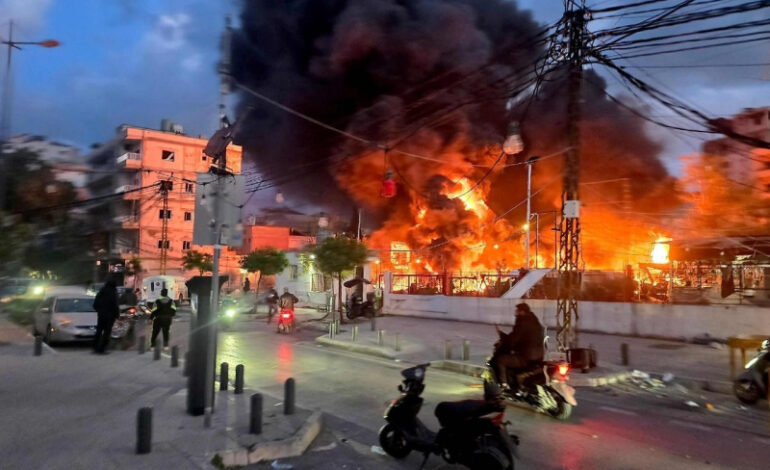

Humanitarian organizations connected to the Catholic Church have mobilized emergency support for migrants and displaced families in Lebanon as escalating violence across the Middle East forces large numbers of people to flee their homes. Aid groups warn that the humanitarian situation is rapidly worsening as fighting spreads and thousands seek shelter in already strained urban areas.
The Jesuit Refugee Service, a global Catholic organization focused on supporting refugees and migrants, has intensified its operations across Lebanon to respond to the growing displacement crisis. Church shelters and humanitarian teams are now working to provide emergency accommodation, food assistance, and psychological support for vulnerable communities affected by the conflict.
Regional leaders within the organization report that the number of displaced people has risen dramatically as military strikes and cross border tensions escalate in the region. Families from southern Lebanon and heavily affected districts of Beirut have been forced to abandon their homes, with many attempting to find safety in the capital or nearby coastal areas.
Humanitarian workers estimate that several hundred thousand people may have been displaced in recent days, although official figures remain uncertain as the situation continues to evolve. Local authorities have attempted to respond by converting hundreds of public schools into temporary shelters for families fleeing the violence.
Despite these efforts, available space is already overwhelmed in many locations. Emergency shelters created by the government are reported to be operating at full capacity as displaced residents continue arriving in search of safety and basic assistance.
Aid organizations say migrant workers and foreign residents are facing additional challenges accessing support services. While official policy does not exclude non Lebanese residents from government shelters, reports from humanitarian groups suggest that migrant communities are sometimes denied entry or struggle to receive assistance through formal channels.
In response, Catholic institutions and local Church communities have reopened emergency shelters originally established during previous regional conflicts. These facilities are now providing refuge for migrants and refugees from several countries including the Philippines, Ethiopia, Sudan, Eritrea, Yemen, Sierra Leone and Nigeria.
Church based support centers have become essential lifelines for many displaced families who lack access to official accommodation. Volunteers and aid workers are distributing meals, hygiene supplies and essential household items while offering pastoral care and emotional support to those affected by the crisis.
Before the latest escalation of violence, many Jesuit Refugee Service programs in Lebanon focused on educational initiatives for migrants and refugee children. However, with schools now closed due to security concerns, staff have redirected their work toward emergency humanitarian relief.
Mental health and psychosocial support programs remain active, helping displaced individuals cope with trauma, uncertainty and the loss of their homes. Aid workers say these services are particularly important for children and families who have experienced repeated displacement.
Local Church leaders continue to emphasize the urgent need for peace and diplomatic dialogue to prevent further suffering in the region. Community members displaced by the violence express hope that stability will eventually return so they can rebuild their lives and return to their homes.
Humanitarian organizations warn that without an immediate reduction in violence and stronger international support for relief efforts, the number of displaced people in Lebanon could continue to rise as the regional conflict expands.