Pope Leo XIV Says Human and Divine Dimensions of the Church Exist in Harmony
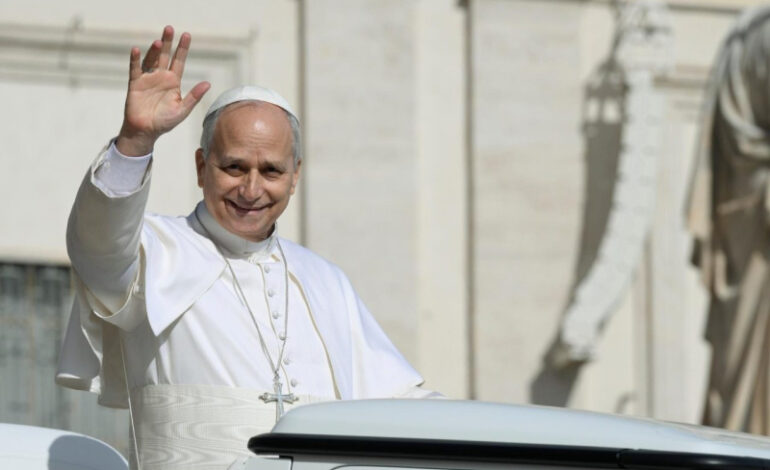

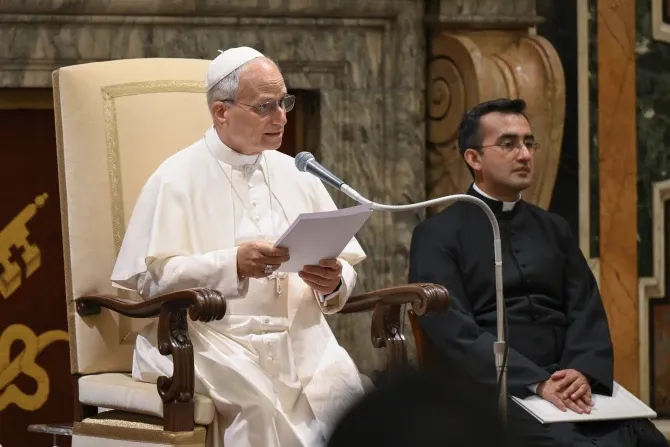
During his weekly General Audience at the Vatican, Pope Leo XIV reflected on the nature of the Church, emphasizing that its human and divine dimensions are not in conflict but exist together in harmony. Continuing his series of catecheses on the Second Vatican Council’s constitution Lumen gentium, the Pope explained that the Church must be understood as both a visible community in history and a spiritual mystery rooted in God’s plan.
Addressing pilgrims gathered for the audience, the Pope noted that the Church cannot be imagined as a perfect institution detached from the realities of human life. Instead, it is a community formed by real people who live their faith with both strengths and weaknesses while striving to follow the Gospel.
According to the Pope, Lumen gentium presents the Church as a complex reality in which the human and divine coexist without confusion or separation. The human dimension is visible in the daily lives of believers who experience joy, struggle, and the challenges of living the Christian vocation. These individuals proclaim the Gospel and become witnesses of Christ in the world.
At the same time, the Church possesses a divine dimension that does not depend on the personal perfection of its members. Rather, this divine character originates from God’s plan of salvation fulfilled through Jesus Christ. The Church exists because of this divine initiative and continues Christ’s mission throughout history.
Pope Leo explained that the Church can therefore be described through several complementary realities. It is both an earthly community and the mystical body of Christ. It is a visible assembly of believers and at the same time a spiritual mystery that points beyond itself. It is a historical institution and also a people journeying toward eternal life.
The Pope noted that this unity of human and divine elements reflects the life of Christ himself. Those who encountered Jesus during his earthly ministry experienced his humanity through his words, gestures, and personal presence. Yet through that human encounter, they also came to recognize the presence of God.
In the same way, the Church reveals the action of Christ even through the limitations of its members. Human weakness, mistakes, and fragility do not negate the Church’s mission. Instead, they become the very context in which Christ continues to act and offer salvation.
Pope Leo also recalled reflections from Pope Benedict XVI, who once reminded bishops that there is no opposition between the Gospel and the institutional structure of the Church. The structures that guide the Church’s life exist to make the message of the Gospel present and effective in every age.
The Pope stressed that holiness within the Church does not arise from the flawless behavior of its members but from the presence of Christ who continues to work through them. Through the ordinary lives of believers, the Gospel remains active in the world.
For this reason, the Holy Father encouraged Christians to focus not only on the visible organization of the Church but also on strengthening spiritual communion among believers. Building the Church means fostering unity, charity, and authentic Christian witness within communities.
Pope Leo concluded by urging the faithful to become credible witnesses of Christ’s love so that the world may recognize the charity that defines authentic Christian life and sustains the mission of the Church.