


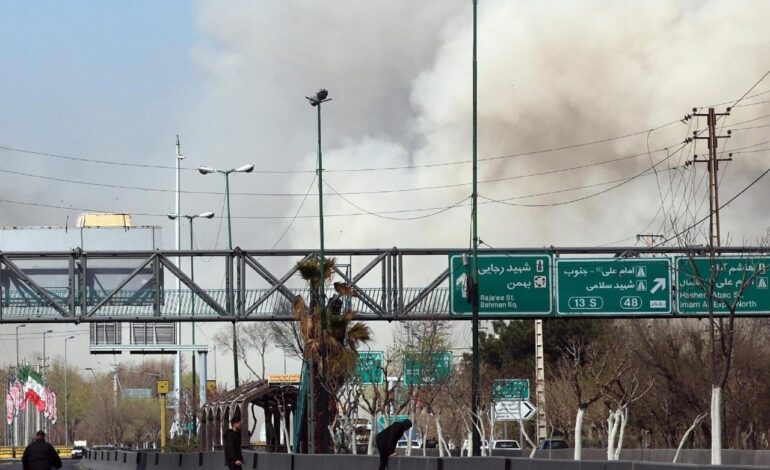

A new wave of explosions struck Tehran on Thursday, marking another intense day in a conflict that has now entered its sixth day. Images emerging from the Iranian capital reveal extensive damage across several areas as continued military strikes and aerial activity deepen concerns about regional stability.
Fresh photographs from the city show large sections of infrastructure damaged after days of sustained attacks involving United States and Israeli forces. The latest explosions were reported across parts of Tehran early Thursday, adding to the growing destruction witnessed since the conflict began earlier in the week.
Military activity was also reported in Israel after new attacks were launched from Iran. Explosions were seen in the sky above Israeli territory as defense systems were activated to intercept incoming fire. According to statements from Israeli authorities shared through official channels, defensive systems were engaged and alerts were issued to residents in affected areas to ensure public safety.
The Israeli military also issued warnings to residents in southern districts of Beirut, advising them to move eastward as tensions along regional borders continued to intensify. The advisory reflected growing fears that the ongoing confrontation could extend beyond the immediate areas already involved in the fighting.
Elsewhere in the Gulf region, the United Arab Emirates confirmed it had intercepted multiple aerial threats. Officials reported that six Iranian missiles and 131 drones were intercepted on Thursday. Authorities said that while most of the incoming weapons were successfully stopped, one missile and six drones ultimately fell within Emirati territory.
Explosions were also reported in Qatar and Bahrain during the same period, adding to concerns about the expanding geographic reach of the conflict. While officials in those countries did not immediately provide detailed damage assessments, the incidents signaled increasing regional vulnerability as military activity intensified.
Further north, Azerbaijan reported that two Iranian drones had entered its airspace, an event that added another dimension to the growing cross border tensions. Meanwhile, a tanker operating in the northern Gulf was damaged in a separate incident. Iranian officials later stated that the vessel involved belonged to the United States, highlighting the complex and disputed narratives surrounding the unfolding events.
In northern Iraq, Kurdish Iranian groups responded to claims that their fighters had crossed into Iranian territory, firmly denying the accusations and rejecting suggestions that they had taken part in any cross border military movement.
As the conflict entered its sixth day, European leaders began increasing their focus on regional defense coordination. Several European Union members pledged additional support to Cyprus and other allied countries in the region. Greece, the United Kingdom and France had already announced plans earlier this week to deploy naval vessels and air defense systems to Cyprus after drones targeted the Royal Air Force base at Akrotiri.
Italy and Spain have now joined those commitments, signaling broader European involvement in efforts aimed at protecting regional security infrastructure. The Netherlands is also reviewing potential assistance measures as discussions continue among European governments.
European Union foreign policy chief Kaja Kallas said several Middle Eastern governments have warned European officials about the growing risk of internal instability in Iran. She noted that concerns about the potential for civil conflict inside the country are increasing, while regional governments have also raised alarms about maritime security and the safety of shipping routes across the Gulf.