



Migrant children protection: Pope Leo XIV’s appeal
Pope Leo XIV has renewed his public appeal for stronger safeguards for children moving across borders, placing their dignity at the center of pastoral priorities, as indicated by the report. In his message for the World Day of Migrants and Refugees, reportedly published in September 2026, he urged institutions to move beyond rhetoric and ensure practical care that reaches minors in transit and in reception settings, as outlined by the Vatican source. A Vatican report noted he framed migrant children protection as a moral test for societies shaped by mobility and global trade. He further warned, according to the Vatican source, that administrative delays and unclear responsibility between agencies can expose children to exploitation. The appeal called for coordinated action among governments, humanitarian actors, and local communities, with accountability for outcomes.
Why children on the move face higher risks
Church agencies and child advocates have emphasized that the risks for minors begin long before arrival and do not end at a border. As the Vatican’s report explained, the Pope linked this concern to threats such as trafficking, family separation, and prolonged uncertainty in shelters and camps. For context on how conflict displaces families and strains humanitarian corridors, see Vatican News coverage of displacement pressures in Yemen. That same report said he insisted children should not be treated as files to be processed but as persons with rights and a future to be protected. The report further suggests he urged states to improve safe pathways and age-appropriate reception conditions as part of migrant children protection.
Policy and humanitarian steps urged in 2026
Several national and local initiatives highlighted by Catholic networks focus on improving coordination between civil authorities, social services, and frontline charities, especially at major arrival points, according to those networks’ public communications. In that context, child protection in migration settings often depends on clear case management, access to guardianship, and timely family tracing—priorities that Vatican communications have repeatedly emphasized around the World Day of Migrants and Refugees. Cross-sector cooperation often requires predictable funding, trained staff, and compatible data handling, without reducing children to numbers. A separate example of how institutions seek clearer rules in other policy fields can be seen in EU budget agreement: Portugal and Ireland seek deal, which shows how negotiated frameworks can unlock practical support. In his World Day message, the Pope reportedly urged that commitments be judged by results for minors, according to the Vatican source.
How Catholic dioceses are strengthening safeguarding
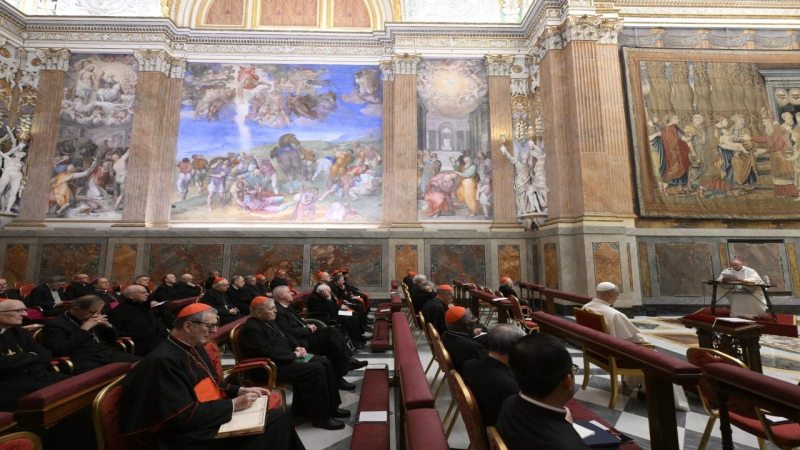
The Catholic Church is positioning dioceses, parishes, and religious communities to offer services that supplement state capacity while maintaining professional safeguarding standards, according to Vatican guidance and reporting. As indicated in the Vatican report, the Pope’s focus on child welfare is tied to catechesis, education, and pastoral planning intended to reach migrant families in their daily lives. In Rome and in receiving dioceses, Church initiatives commonly prioritize safe accommodation referrals, psychosocial support, and accompaniment for unaccompanied minors, as described in Church and charity program summaries. Related planning is discussed in Diocese of Rome pastoral evaluation ordered by Pope Leo. The Vatican has also signaled that diocesan structures should be evaluated for readiness to protect minors in all settings, not only within schools and parishes, as summarized by Vatican communications. Wider formation priorities are also outlined in Pope Leo XIV Consistory: Culture and Education Plans.
What happens next for protection and reception
Looking ahead, Vatican officials may keep elevating child-centered protection standards in diplomacy, pastoral guidance, and cooperation with humanitarian partners, though timelines and specific next steps have not been formally detailed. In the Pope’s framing as indicated by the Vatican source, commitments should translate into safer routes, faster identification of vulnerabilities, and consistent access to schooling and health care once children reach a stable location—core elements of migrant children protection. The Vatican source reported that Pope Leo XIV called for responsibilities to be shared rather than shifted, with special attention to minors who arrive alone or whose families are fragmented across jurisdictions. He also urged communities to resist stigmatization that isolates newcomers and increases risk, according to the Vatican source. The message emphasized that durable solutions require both immediate care and long-term integration support that respects the best interests of the child, as summarized by the Vatican source.