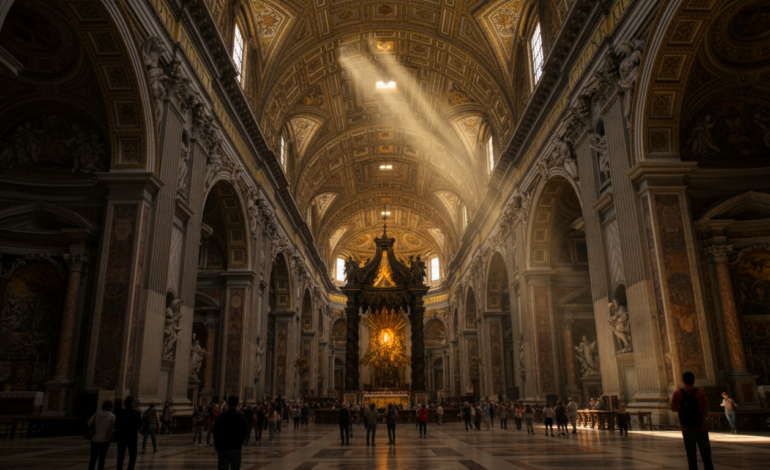

Pope Leo XIV’s Vision for the Church
Pope Leo XIV is using his recent catechesis to set a clear governing frame for the pontificate, insisting that the Church must measure pastoral choices by fidelity and mission. Today his approach is being tested by fast moving cultural conflicts and by uneven parish realities across continents. In that context, the Second Vatican Council is presented as a practical compass for preaching, governance, and public witness, not a museum piece. The Pope’s message emphasizes unity without uniformity, urging bishops to keep communion visible in decisions that affect worship and social action. Live reactions from Church leaders have focused on how this language can steady debates about identity and service. An Update from Vatican communications also stresses continuity, not rupture.
Understanding Vatican II’s Role Today
Rome is treating the catechesis as a working brief for dioceses, with officials signaling that formation programs will be aligned more tightly with conciliar priorities. The Pope’s stress on the Second Vatican Council is being read as guidance for how pastors address polarization while keeping evangelization central. For a contrasting look at how public institutions handle fast policy shifts, see NFT Regulation Could Reshape Digital Assets Market in a separate sector. Today, as digital platforms amplify disputes, he is asking clergy to speak with clarity that is both doctrinal and humane. The Vatican’s own public record on pastoral messaging is documented by Vatican News coverage of Pope Leo XIV in Naples, which highlights a call to make communities workshops of peace. Live briefings have continued, and an Update is expected as local churches publish implementation notes.
Key Teachings from the Council
Curial advisers close to the catechesis are highlighting how the Pope is steering attention to core themes rather than niche controversies. He points readers back to second vatican council documents that shape daily ecclesial life, especially on liturgy, the Church’s nature, and engagement with the modern world. To contextualize his emphasis on trustworthy texts and publishing standards, readers can consult Pope Leo XIV lauds Vatican Publishing House work, which describes his expectations for careful transmission. Today the most cited lines are those that connect worship to mission and that define the laity as active participants in sanctifying ordinary life. Live discussions in seminaries are focusing on how catechesis, preaching, and formation can be anchored in conciliar teaching without turning it into slogans. An Update from several episcopal conferences is anticipated as training modules are revised.
Impact on Modern Catholicism
In practical terms, the Pope is connecting conciliar reception to concrete pastoral closeness, especially where inequality and conflict press on local communities. He is implicitly arguing that Vatican II documents are not only theological statements but also tools for governance that protect human dignity and maintain communion when politics becomes harsh. Today that line is resonating in dioceses facing migration pressures and economic strain, where bishops need language that does not inflame division. Vatican News reporting on Pope Leo XIV with clergy in Naples records his insistence that the Church offer closeness amid difficulties, which Vatican officials are tying to conciliar principles of pastoral care Vatican News reporting on Pope Leo XIV with clergy in Naples. Live coverage of his pastoral travel has made this link explicit, and an Update on related initiatives is expected as dioceses announce social and catechetical projects.
Future Directions for the Church
What emerges is a governing method aimed at reducing factionalism by returning debates to shared sources and to the discipline of reading texts carefully. The Pope’s staff describe the catechesis as a template for how bishops can act decisively while still listening, especially when tensions arise around catechesis, public morality, and parish life. Today the long term signal is that leadership will be evaluated by whether it strengthens evangelization and communion rather than rewarding rhetorical camps. By framing the Second Vatican Council as a North Star, he is also setting expectations for how Vatican offices and conferences coordinate formation and communications. Live monitoring of diocesan reception will likely shape which priorities receive resources first. An Update cadence is being established through regular catecheses that keep the same interpretive lens in view.