
Cardinal Louis Raphaël Sako Resigns as Chaldean Patriarch of Baghdad After Years of Leadership Amid Crisis
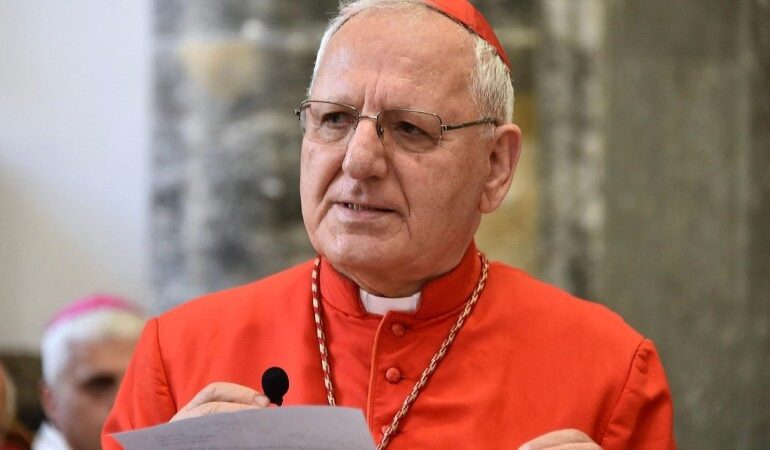

Cardinal Louis Raphaël Sako has stepped down from his role as the Chaldean Patriarch of Baghdad after Pope Leo XIV formally accepted his resignation. The announcement marks the end of more than a decade of leadership for the head of the Chaldean Catholic Church, one of the most historic Eastern Catholic communities in the Middle East. In a personal letter explaining his decision, the cardinal reflected on the challenges that shaped his ministry in Iraq and confirmed that the resignation was submitted voluntarily. He expressed a desire to dedicate the coming years to prayer, writing, and quiet service after guiding the Church through some of the most difficult periods in its modern history.
The resignation was accepted in accordance with the provisions of Canon 126 paragraph 2 of the Code of Canon Law of the Eastern Churches. Cardinal Sako explained that he had already considered stepping down two years earlier when he turned seventy five, which is commonly seen as a milestone for senior Church leaders. At that time he discussed the matter with Pope Francis, who encouraged him to remain in office. After further reflection he eventually presented his resignation to Pope Leo XIV. In his letter the cardinal emphasized that the decision was entirely his own and was made in order to serve the Church in a more reflective and spiritual capacity.
Reflecting on his years in Baghdad, Cardinal Sako described his ministry as a period marked by hardship but also dedication to unity within the Chaldean Catholic Church. Iraq’s Christian communities have faced years of instability, migration, and security threats that deeply affected the Church and its faithful. Despite these challenges he said he worked to preserve the unity of Church institutions and defend the rights of Christians and all Iraqis. Throughout his leadership he maintained an active presence both within the country and internationally, speaking about the needs of Iraq’s Christian population and advocating for peace, coexistence, and the protection of religious communities.
During his thirteen years as patriarch he sought to guide the Church through pastoral care and community rebuilding. In his letter he expressed gratitude for the people who supported him throughout his priestly journey. His ministry began as a priest serving in Mosul before he was appointed bishop of Kirkuk and eventually patriarch in Baghdad. He thanked colleagues, assistants, and members of the faithful who accompanied him during these years of service. Looking ahead he expressed hope that the next patriarch will bring strong theological understanding, courage, and wisdom to the role while encouraging renewal, openness, and dialogue within the Church and broader Iraqi society.
The cardinal also used the letter to share personal reflections about his life and service. He revealed that over the years he prepared a will that has been updated several times since his early days as a priest. According to the statement his personal savings consist of approximately forty million Iraqi dinars along with modest amounts in U.S. dollars and euros accumulated from decades of clerical service. He explained that these funds came primarily from his salaries during more than five decades of ministry as well as the sale of a family home in Mosul. He added that he does not own a house or a car and described his true wealth as the years he devoted to serving the Church.
Cardinal Sako also highlighted the intellectual and pastoral legacy he leaves behind. Over the course of his ministry he authored forty five books and numerous articles addressing theology, Church history, and the situation of Christians in the Middle East. His writings often focused on interreligious dialogue, the role of Christians in Iraqi society, and the importance of peaceful coexistence between religious communities. These works became part of his broader effort to promote understanding and stability in a region where religious identity and politics often intersect in complex ways.
The Chaldean Catholic Church now enters a new stage as preparations begin for the selection of a successor who will lead the patriarchate of Baghdad. Church observers say the transition comes at an important moment for Iraqi Christians who continue to rebuild their communities after years of conflict and displacement. The next patriarch will be expected to guide the Church through ongoing social and political challenges while strengthening pastoral outreach to the faithful in Iraq and the growing Chaldean diaspora around the world. For many believers Cardinal Sako’s departure marks the close of a significant chapter in the Church’s modern history.