Algeria shuts Protestant churches as Christian worship is forced underground amid tightening restrictions

Reports from human rights monitors and religious freedom groups indicate that Protestant Christian communities in Algeria are facing severe restrictions, with nearly all officially recognised Protestant churches now closed, forcing many believers to gather in private homes or informal locations. The developments have raised renewed concerns over freedom of worship in the country, particularly for minority religious groups operating outside the state approved religious framework. According to recent documentation cited by advocacy organisations, the closures have accelerated in recent years, leaving much of Algeria’s Protestant community without access to formal church buildings or public worship spaces.
The situation has been described as part of a broader regulatory environment governing non Muslim religious activity, where licensing requirements and administrative controls have been increasingly enforced. Observers note that since 2017, church closures have become more systematic, affecting congregations affiliated with the Protestant Church of Algeria as well as independent evangelical groups. By early 2025, reports suggest that almost all remaining evangelical churches had ceased operations in their formal capacity, marking a significant reduction in visible Christian worship structures across the country.
A 2026 assessment by the European Centre for Law and Justice has characterised the legal framework as highly restrictive, arguing that it creates a widening gap between constitutional guarantees of religious freedom and the practical reality experienced by Christian minorities. The report highlights that while Algeria’s constitution formally recognises freedom of worship, administrative procedures and enforcement practices have resulted in repeated closures and limitations on public religious gatherings. It argues that this combination of legal ambiguity and enforcement has contributed to an environment where public Christian worship has become increasingly difficult to sustain.
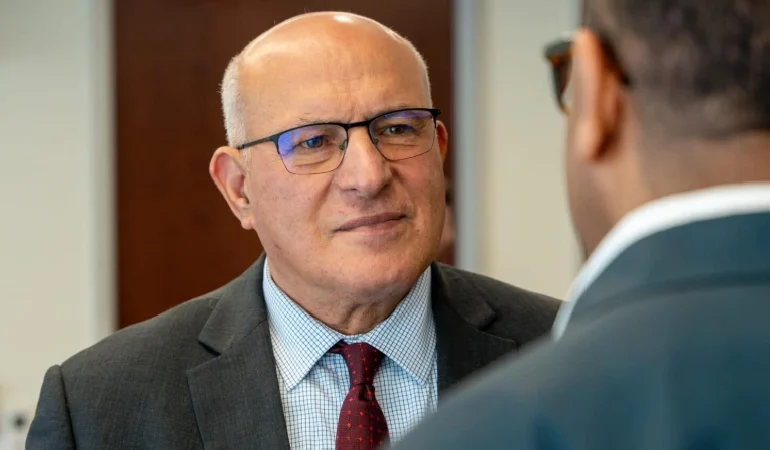
Individual cases have also drawn international attention, including that of Pastor Youssef Ourahmane, a Christian convert and leader within the Protestant Church of Algeria, who was arrested and later sentenced in connection with what authorities described as unauthorised religious activity. His case has been cited by advocacy groups as emblematic of broader tensions between state regulations and religious practice. Supporters argue that such prosecutions highlight the challenges faced by clergy and lay leaders who attempt to organise public worship within a highly regulated environment, while authorities maintain that all religious activity must comply with national laws governing public order and religious organisation.
As formal church structures continue to disappear, many Christians in Algeria are reportedly adapting by meeting in smaller private groups, often without official recognition or dedicated worship spaces. This shift has raised concerns among international observers about the long term sustainability of religious minorities operating outside formal frameworks. Human rights organisations continue to call for greater clarity in legal protections and more consistent application of constitutional principles, while noting that the situation reflects a broader global debate about the balance between state regulation and freedom of religion.