




Vatican renewable energy project near Rome: overview
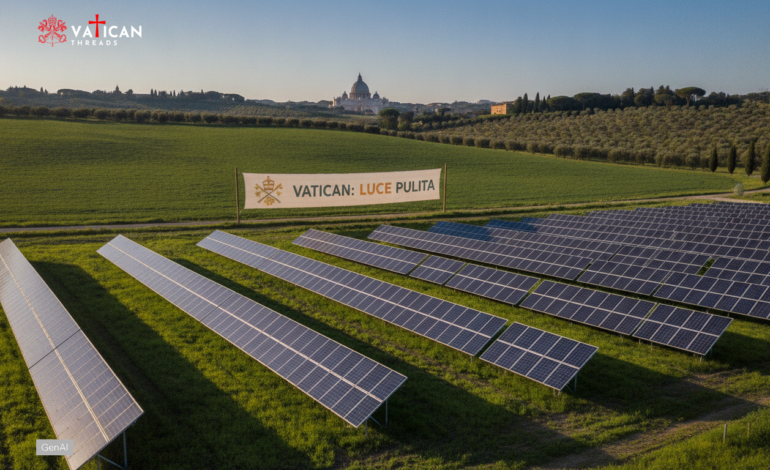
Vatican renewable energy is moving from broad commitments to concrete procurement and permitting steps that can reshape the Holy See’s footprint beyond Vatican City’s walls. The June 2026 agreement sets a clear pathway for implementation work to begin near Rome using an agrivoltaic plant model that pairs electricity generation with continued farming. Officials have framed the effort as part of a wider climate and governance agenda. This agenda focuses on targets that can be verified, contracts that can be audited, and oversight that is transparent. The plan is presented as practical infrastructure rather than symbolism, linking sustainability language to measurable energy outcomes while keeping land use and local rules central.
Vatican renewable energy agreement: what was signed
The Holy See signed an agreement in June 2026 for a renewable energy initiative near Rome, outlining a framework for an agrivoltaic installation that combines solar production with agricultural activity. According to available reports from Vatican News, the signing and project direction were highlighted, emphasizing that the next phase is implementation planning and coordinated development steps. In operational terms, the agreement clarifies who is responsible for permitting, development coordination, and delivery milestones as the build advances. It is presented as the primary reference for the announcement and its stated scope, including the agrivoltaic approach as the central design choice.
Partners and governance for delivery
Delivering grid-ready generation depends on structured partnerships, and planning is being positioned as a governance exercise as much as an engineering one. The agreement highlights coordination mechanisms, procurement discipline, and compliance checks that help keep accountability clear across institutional and technical teams. For readers tracking how complex rollouts are managed under tight standards, Blockchain Technology Tackles AI-Driven Ad Fraud offers a separate example of cross-sector coordination, though in a different field. As indicated by officials, Vatican renewable energy credibility comes from execution, so contract management and documented oversight are central to the project’s pace and integrity. In this case, partners must meet regulatory, agricultural, and energy requirements at once near Rome.
What it could mean for Vatican City energy use
For Vatican City, the practical value is the potential to secure cleaner electricity through arrangements that can be verified, audited, and reconciled with consumption patterns. The Vatican News announcement did not provide production figures, but the dual-use premise implies farming continuity alongside solar generation, reducing trade-offs and supporting permitting and long-term operation. Related coverage such as Vatican diplomacy: Pope Leo XIV hosts Korea president reflects the same institutional emphasis on measurable follow-through and accountable outcomes across policy areas. Vatican renewable energy strategy also signals a preference for solutions that can scale without displacing land stewardship, which is why the agrivoltaic model matters.
Implications for Vatican sustainability goals
Over the longer term, the project could embed Vatican renewable energy into a repeatable model that other Church-linked entities can evaluate without copying the exact site or legal structure. Agrivoltaics can support local food production while meeting renewable procurement aims, helping avoid false choices between ecology and livelihoods. Related reporting on priorities and public engagement, including Pope Leo XIV visits Sagrada Familia with peace appeal, shows how institutional commitments are expected to translate into concrete action. Vatican News framed the June 2026 agreement as a step toward a cleaner energy posture, suggesting verification and governance will matter as much as construction. If implementation proceeds smoothly, it may strengthen internal policy coherence and offer a case study for faith-based institutions seeking emissions reductions through contracted supply.