





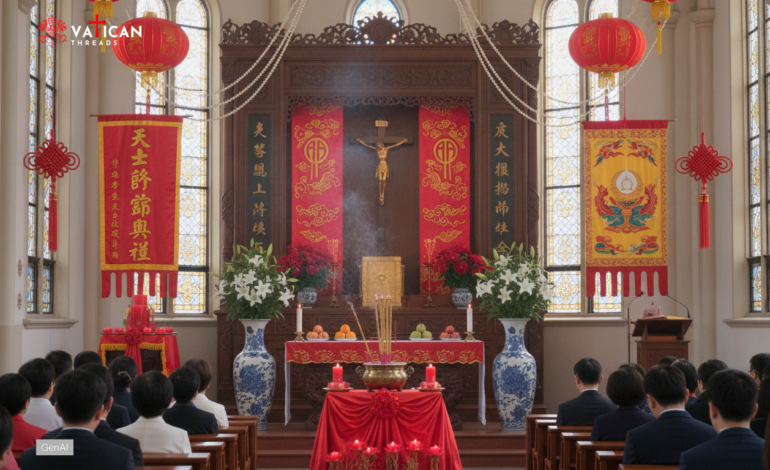

Bishop Joseph Chang Yanfeng and the Chifeng ordination
According to Vatican News, and observers have treated the ceremony as a real-world signal of how episcopal appointments are handled under the Vatican-China Provisional Agreement. Bishop Joseph Chang Yanfeng was ordained in Chifeng on 2026-07-21. According to the Holy See’s public communication as reported by Vatican News, the ordination proceeded with papal approval within the framework used for nominations and recognition. Vatican News identified Bishop Joseph Chang Yanfeng as the newly ordained bishop and described the ceremony as part of ordinary pastoral governance for the diocese. The timing is often viewed as important because, as Church officials typically argue in similar contexts, each publicly recognized ordination can reduce uncertainty for clergy and the faithful about who holds canonical authority to lead, teach, and govern.
Profile of Bishop Joseph Chang Yanfeng
The bishop steps into leadership with responsibilities for clergy formation, sacramental life, and diocesan administration in a region where, according to analysts and reporting on the Church in China, Catholic structures can operate under close scrutiny. Vatican News described the ordination and identified him as the bishop of Chifeng, which the outlet presented as confirmation of the Holy See’s recognition of his episcopal ministry. The ceremony’s public character was widely interpreted as significant because it could be read as signaling continuity between local Catholic communities and Rome’s canonical process, though the precise implications depend on how subsequent governance unfolds. A parallel example of how legitimacy and oversight are publicly argued can be seen in https://londonews.com/thames-water-nationalisation-risk-lenders-back-golden-share/, where governance mechanics shape outcomes.
What the Vatican-China Provisional Agreement covers
The ordination China process may remain the most visible arena where the Provisional Agreement is either strengthened or strained, according to commonly cited commentary on Vatican-China relations. Readers can consult Vatican News coverage of the Chifeng ordination for the official wording and presentation, and Vatican News’ report on “Bishop of Chifeng ordained in China” provides the key documentary basis for how the Holy See publicly framed this appointment, including its emphasis on communion with the Pope and its statement that papal approval was given. In practical terms, Church sources often contend that each mutually recognized episcopal ordination can limit the space for parallel leadership claims and reduce confusion over sacramental authority, though outcomes can vary by locality.
Impact on Catholic Church China communities
For local Catholics, the immediate effect of a bishop recognized by the Holy See is often described as greater clarity in decision making about seminaries, charitable programs, parish assignments, and the delegation of pastoral responsibilities. In Catholic Church China contexts, daily practice can depend on whether clergy and lay leaders feel they can rely on consistent diocesan direction without contested mandates or ambiguous jurisdiction, as frequently noted in reporting about Church administration. A wider Vatican emphasis on pastoral leadership and accountable authority appears in Pope Leo XIV peace: dialogue and verified disarmament, and the ordination also carries an ecclesial message emphasized in Vatican communications: the Church’s sacramental life is intended to be publicly coherent, with episcopal ministry connected to universal communion, and in Pope Leo XIV to CMSM: community forms holiness.
What comes next for Vatican-China relations
The longer-term meaning of the Chifeng ordination will likely be judged by whether similar appointments proceed with fewer delays and clearer public recognition on all sides, as Vatican-watchers often frame the question. Diplomatic language can obscure the pastoral stakes, but episcopal succession is typically measurable through rites, mandates, and sustained diocesan governance over time. Vatican officials have described the agreement in general terms as a working mechanism rather than a final settlement, and its credibility is commonly seen as rising when appointments are implemented without contradictory signals from local actors. Bishop Joseph Chang Yanfeng may become a reference point for whether local administration can proceed with more predictable collaboration and reduced friction, though that assessment will depend on subsequent cases. The next phase will likely be shaped by repeated confirmations, in official statements and observable practice, that dioceses can function transparently within canon law and local constraints.