Cardinal Pizzaballa says Jerusalem is called to heal the world’s wounds amid ongoing conflict
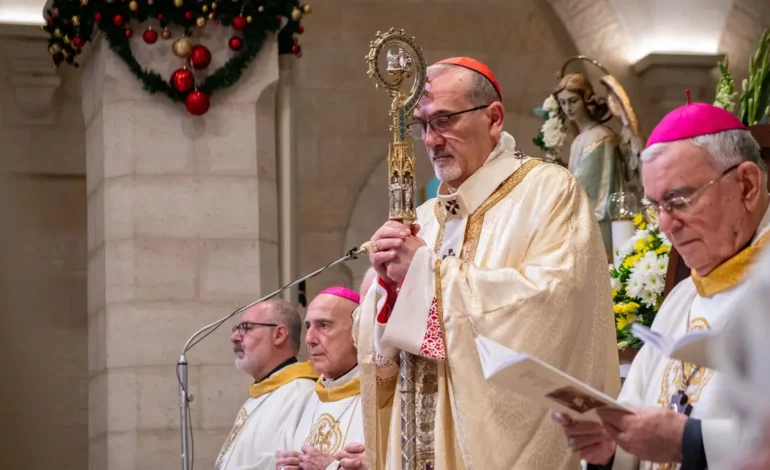

Cardinal Pierbattista Pizzaballa, the Latin Patriarch of Jerusalem, has issued a deeply reflective pastoral letter addressing the continuing conflict in the Holy Land, urging Christians to see Jerusalem not only as a place of suffering but as a spiritual mission field called to bring healing to a fractured world. In his letter titled “They returned to Jerusalem with great joy A proposal for living the vocation of the Church in the Holy Land,” the cardinal presents a theological and pastoral vision shaped by the realities of war while firmly rooted in hope, reconciliation, and Christian witness. He argues that the current conflict has marked a decisive turning point in regional history, describing it as an event that has closed one era and opened another in the most painful of circumstances, yet still calling believers to rediscover purpose within it.
The letter reflects on how Christians in the region are living through a period of deep instability and emotional exhaustion, where daily life is marked by uncertainty, loss, and fear. Cardinal Pizzaballa emphasizes that the vocation of Jerusalem is not limited to its historical or geopolitical identity, but extends into a spiritual responsibility to embody coexistence, relationship, and dialogue between peoples. He describes Jerusalem as a symbolic city where civil and religious dimensions intersect, making it both fragile and uniquely important in the global religious imagination. In this context, he calls on local Christian communities to resist despair and instead become instruments of reconciliation, even when political solutions appear distant or unattainable.
A central theme of the pastoral reflection is the idea that the Church in Jerusalem must continue its mission even in the absence of peace. The cardinal explains that Christian presence in the Holy Land is not dependent on political stability but on a deeper calling to remain faithful to the Gospel in the midst of suffering. He highlights that parishes, families, schools, and ecclesial institutions all play a role in preserving human dignity and fostering resilience. According to his message, these communities are not only places of worship but also spaces where healing begins through everyday acts of solidarity, education, and mutual care. This lived witness, he suggests, becomes a form of silent resistance against hatred and division.
Cardinal Pizzaballa also makes clear that his reflection is not intended as a political analysis in the narrow sense, but rather as a broader theological interpretation of the Church’s place within society. He explains that Christians are called to live within the reality of the “polis,” meaning the tangible and often painful world of human affairs, while always remaining oriented toward the ultimate and eternal kingdom. This dual awareness, he writes, helps believers avoid both political despair and spiritual detachment. Instead, it encourages a balanced engagement with the world that is both realistic and hopeful, grounded in faith but attentive to human suffering.
The pastoral letter concludes with a renewed call for Christians in the Holy Land to embrace their identity as a community of presence and reconciliation. Cardinal Pizzaballa underlines that even in times of war, the Church’s mission does not diminish but becomes more urgent, as it is precisely in moments of division that the message of peace gains its deepest meaning. He invites believers to see their daily endurance as part of a larger spiritual vocation, one that contributes quietly yet meaningfully to the healing of global wounds.