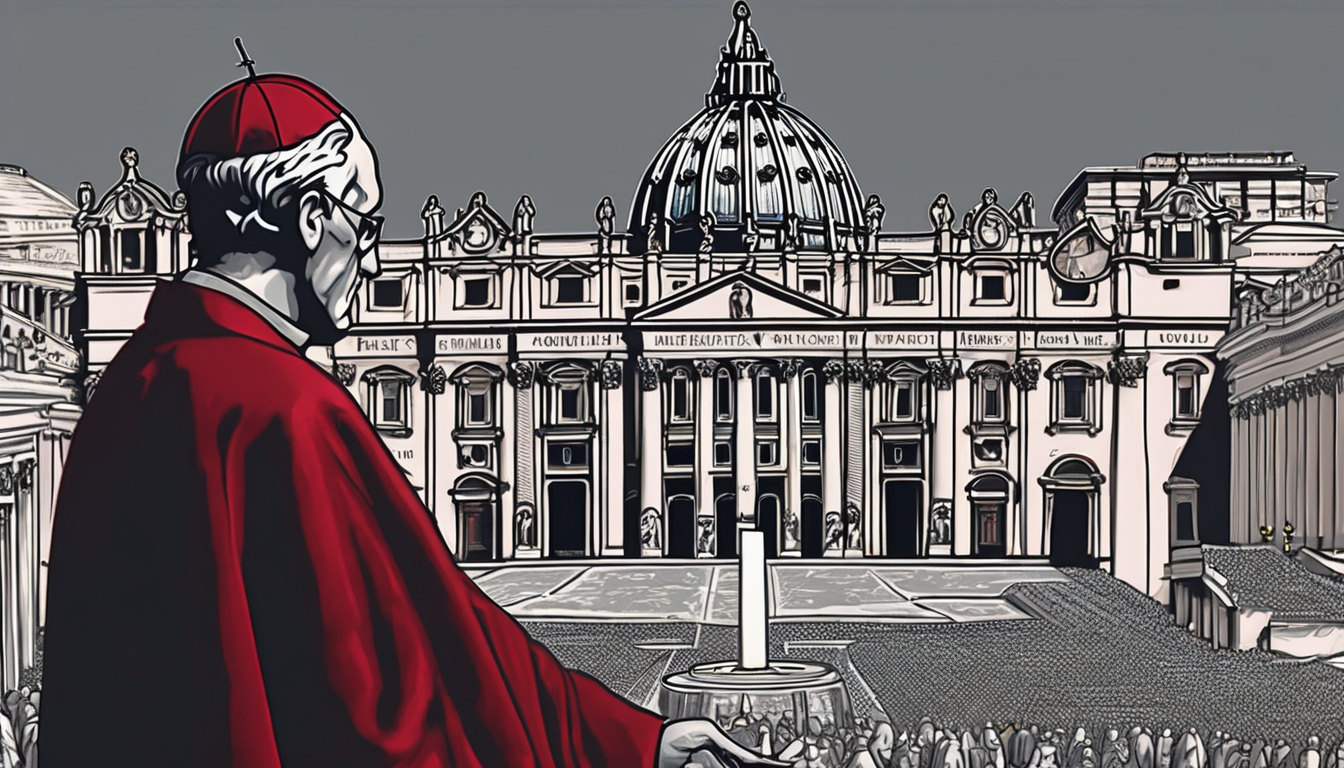






Holy See pushes AI governance at the UN in Geneva
The Holy See has sharpened its message that AI governance should be backed by enforceable public oversight rather than relying only on market momentum, as indicated by available reports on its intervention in Geneva. Archbishop Ettore Balestrero, the Holy See’s Permanent Observer to the United Nations in Geneva, suggested that governance might be necessary so AI serves humanity rather than subordinating people to automated systems. He presented responsibility as potentially shared among states, companies, and multilateral bodies, with safeguards spanning design and deployment, according to Vatican News. The reports indicate that the Holy See may advocate for rules that translate ethics into operational obligations, including accountability when systems fail, discriminate, or cause harm.
AI governance standards tied to human dignity
The Holy See appeared to express concerns related to effects on the person, urging policymakers to judge systems against human dignity and not only efficiency. Vatican News summarized Balestrero as warning that technological power can potentially amplify inequality when decision making becomes opaque and hard to challenge, especially in essential services. In that context, AI governance is presented as a way to possibly require traceability, explainability, and avenues for redress that keep human agency intact. The thrust, as reported, was that dignity-based standards should be embedded in procurement, regulation, and auditing.
Global coordination and AI governance across borders
Diplomatically, the Holy See’s message functioned as a call for cross-border compatibility so systems do not evade scrutiny by shifting jurisdictions. Policy debates increasingly focus on shared baselines for safety testing, reporting, and accountability when tools are used in finance, migration screening, or content moderation, according to widely discussed regulatory agendas. Against that broader backdrop, discussions also intersect with adjacent digital markets where transparency and consumer protection matter. The Holy See’s approach seemingly favors interoperable rules so ethical requirements survive outsourcing, cloud hosting, and third-party model integration.
Implementing AI ethics: proof, auditing, and accountability
Turning principles into practice may be challenging because complex models can obscure how outputs are produced, while accountability appears fragmented across vendors, data brokers, and end users. Within organizations, governance software is often marketed for documentation, risk registers, and monitoring, but tools might only work if leadership assigns responsibility and funds ongoing audits. There is a risk that technical checklists can be gamed unless paired with independent evaluation and meaningful penalties. In line with the Holy See’s emphasis, ethics should be demonstrable in practice rather than merely asserted.
What stronger AI governance could require next
Next steps implied by the Holy See’s Geneva intervention point toward oversight that could be inspected, enforced, and updated as systems evolve. This could include impact assessments before deployment in high-stakes settings, incident reporting channels, and processes that let affected people contest harmful automated decisions. The Holy See’s argument also suggests standards should be anchored in technology ethics that protect the vulnerable, rather than assuming innovation is inherently beneficial. For governments, the practical task might be aligning procurement rules, sector regulators, and competition policy so oversight is coherent and gaps between agencies are closed. For companies, credible compliance could require meaningful documentation and external audits while retaining human responsibility for decisions shaping rights and livelihoods.