

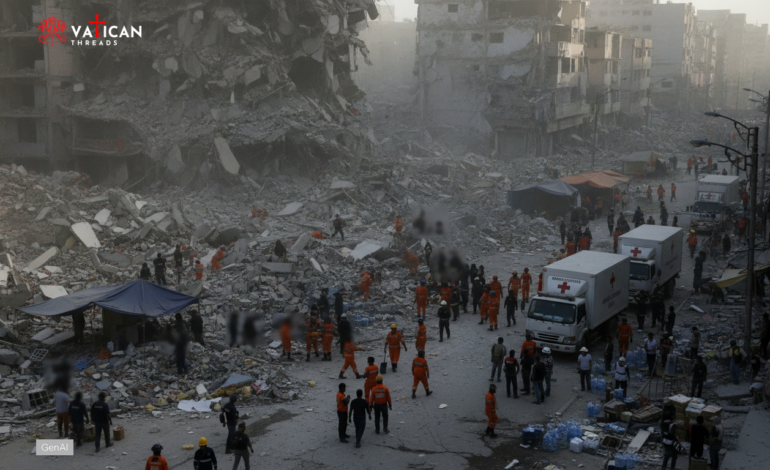

Pope Leo aid Venezuela: Vatican emergency response
Pope Leo aid Venezuela efforts are believed to have accelerated after the earthquake, with Church partners indicating there were urgent gaps in shelter, medicine, and clean water. According to available Church-linked accounts, work through the Secretariat of State and other Vatican offices involved coordination with dioceses and Caritas networks to verify needs and route assistance to affected communities, and Pope Leo aid Venezuela planning focused on verified requests and secure delivery. Early steps were described as prioritizing emergency funds and essential supplies so parish relief points could continue operating. Vatican communications characterized the move as a concrete gesture of closeness paired with practical logistics, and planners stressed speed, documentation, and secure handoff points to help aid reach families despite damaged transport routes and disrupted local services.
How aid is coordinated with dioceses and Caritas
For Pope Leo aid Venezuela logistics, coordination was described as matching requests from local bishops with deliverable items, then assigning responsibilities across charity networks. In its account, Vatican News report on aid to Venezuela described support tied to specific needs communicated from the ground, and teams said they emphasized accountability through written confirmations and distribution records at parish relief points. To compare how large organizations manage verification and routing across multiple partners, see Ripple RLUSD expansion targets Africa and Europe growth, which also highlights coordination challenges across jurisdictions and stakeholders. Notes circulating within diocesan channels referenced parish relief points in Caracas and nearby areas as distribution touchpoints while transport routes were assessed.
What the Venezuela earthquake changed on the ground
In post-quake reporting from Church contacts and local assessments, conditions were described as putting pressure on clinics, shelters, and parish distribution sites across multiple areas. With utilities reportedly disrupted, relief planning centered on basic medical care, temporary shelter materials, and food access where local capacity appeared most affected, and local updates referenced Caracas-area parishes as organizing points. Parish networks were used as trusted channels for identifying vulnerable groups and organizing orderly distribution to reduce duplication and confusion. For a broader view of Pope Leo XIV’s emphasis on organized pastoral action linked to practical outcomes, Eucharistic transformation: Pope Leo XIV on renewal offers additional context. Logistics teams also monitored transport constraints and communications reliability to keep updates as accurate as possible.
Vatican partners and wider international support
Alongside Holy See coordination, regional Church bodies and humanitarian organizations reportedly activated mechanisms to reinforce local responders and maintain supply lines. A parallel funding stream is often encouraged through established collections, and Vatican messaging has referenced structured giving as one way to sustain emergency capacity beyond initial shipments. For context on how donations are directed toward assistance and the mission of the Church, Peter’s Pence appeal guidance explains the framework, including the annual collection referenced in June 2026. Field teams also stressed disciplined reporting to reduce rumors that could obstruct access or slow coordinated deliveries.
What comes next for Vatican emergency aid efforts
For Pope Leo aid Venezuela follow-up, relief officials are expected to evaluate how quickly supplies reached parish distribution points and whether the mix of medical, shelter, and food support matched the most urgent needs identified by dioceses and Caritas teams. Another test is continuity: maintaining assistance once initial stocks are consumed and longer recovery begins. Reference points for that operational mindset are discussed in Pope Leo XIV 1982: Compassion in Catholic Healthcare, emphasizing organized care alongside pastoral presence and measurable delivery. Experience cited from Catholic healthcare initiatives suggests local partners can stabilize services faster when emergency aid is paired with practical protocols, oversight, and clear responsibility for follow up.