
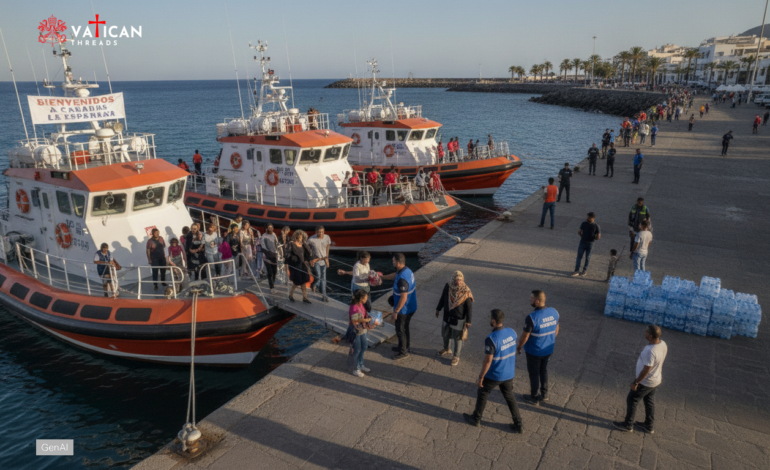

Pope Leo Migration: Call for Migrant Support in Gran Canaria
Pope Leo met Catholic charities and frontline workers in Gran Canaria in June 2026 to press for concrete help for people arriving by sea. According to reports available through Vatican News, he insisted that responsibility does not end at rescue, but continues through reception and accompaniment. He framed the encounter around human dignity and urged institutions to respond with services that protect life and family unity. The message emphasized attention to children, survivors of violence, and people facing prolonged uncertainty, as indicated by the same report, and encouraged cooperation between Church agencies and public services to avoid gaps in care.
Human Dignity and Legal Pathways in Migration Policy
In Gran Canaria, the Pope linked human dignity to orderly procedures that reduce danger and exploitation. This Pope Leo migration message suggests that legal pathways and fair processing can help limit the power of criminal networks while giving states clearer tools for protection. It appears that he urged officials to keep humanitarian obligations visible in administrative decisions. Related policy scrutiny across sectors is tracked in EU budget 2027: Commission floats €200bn plan, and the wider policy context has been debated across Europe. The article EU strategies for islands: Commission plan for coasts outlines how islands face distinct pressures in migration management and reception capacity.
Denouncing Human Trafficking and Protecting Survivors
Pope Leo condemned human trafficking as a direct assault on the human person, according to Vatican News coverage of the visit, and called for stronger protection for those who may be coerced into forced labor or sexual exploitation. The same source highlighted local Church engagement through the report Caritas in the Canary Islands on gaps in frontline services, describing how church teams support people when official systems are stretched. He urged pastors and aid workers to recognize indicators of control, debt bondage, and fear of authorities that can silence victims, as detailed in the news coverage. His focus was on prevention through safer options, as well as sustained care after arrival, including medical, psychological, and legal assistance. He urged coordinated referrals so survivors are not lost between institutions.
Volunteer Morale and Listening to Migrant Voices
Local Catholic groups suggested the visit strengthened morale for volunteers working long shifts at ports, shelters, and parish-based reception points. As reported, workers described pastoral and practical accompaniment led in part by people who have migrated themselves, a model the Pope reportedly highlighted as credible witness. In the Vatican News feature We are migrants ministering to migrants, the accompaniment was led in part by people who have migrated themselves, a model the Pope reportedly highlighted as credible witness. This Pope Leo migration focus also intersected with broader themes from his Spain itinerary, and Pope Leo XIV visits Spain: Eucharist and unity call reflects how he ties social solidarity to sacramental life and parish unity. In practice, groups said clear communication about rights and responsibilities can reduce confusion and help families navigate reception systems.
What the Message Means Beyond the Canary Islands
Available reports suggest the Pope aimed his appeal beyond the islands, signaling that receiving countries, transit countries, and countries of origin share obligations that cannot be outsourced. He emphasized that security concerns must be balanced with humanitarian law and ethical duties, aligning Catholic social teaching with practical governance. For additional context on his Spain visit, see Pope Leo XIV Montserrat Visit: A Call for Peace. The message was presented, according to Vatican News accounts, as a push for predictable channels, coordinated rescue, and dignified reception that avoids prolonged limbo. He encouraged bishops’ conferences and Catholic aid agencies to strengthen cross-border collaboration so that case management, family tracing, and safeguarding standards are consistent. It appears he presented the appeal as a shared responsibility that cannot be outsourced.