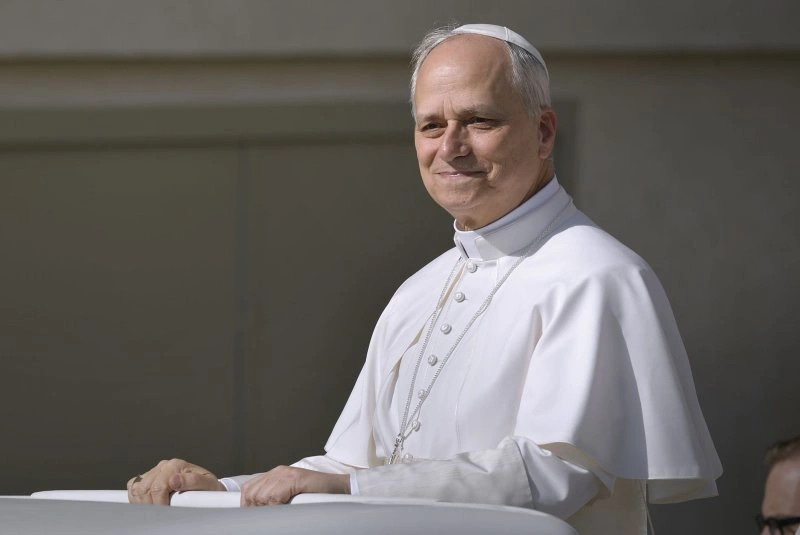
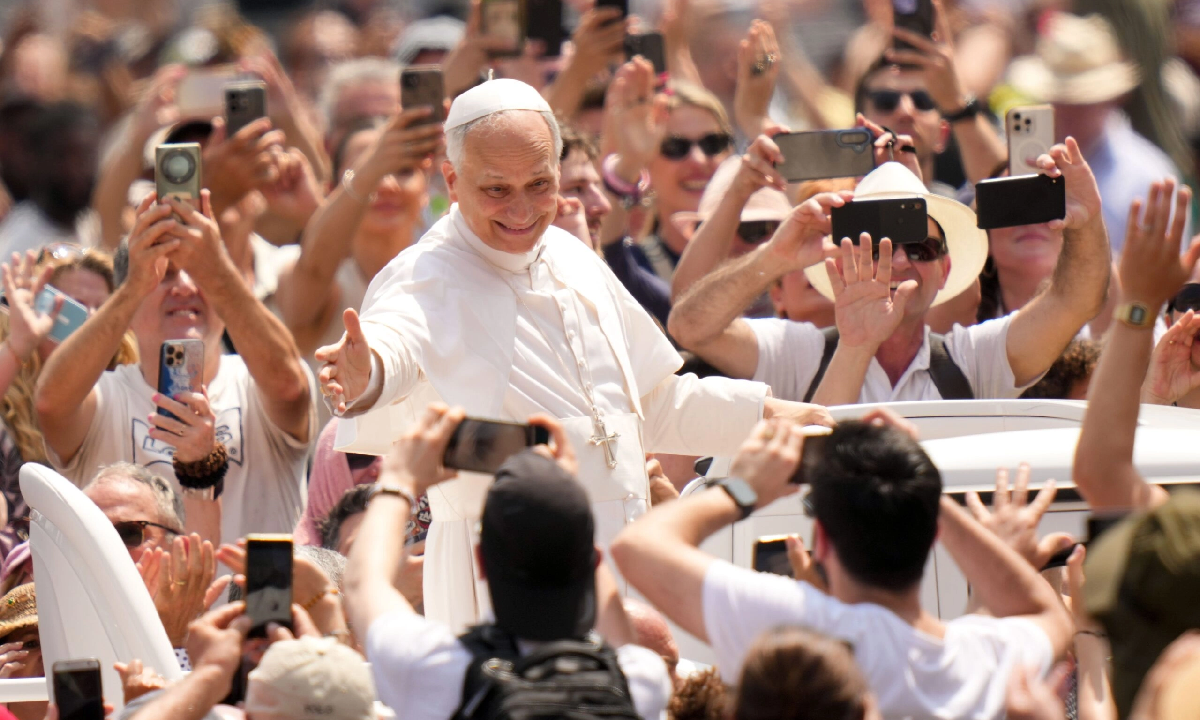
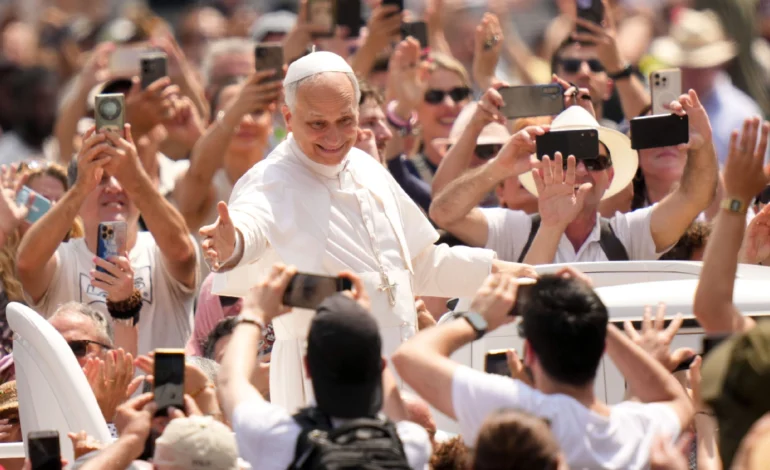

During his weekly General Audience at the Vatican, Pope Leo XIV delivered a strong reflection on the mission of the Church, emphasizing its responsibility to stand firmly against everything that harms human dignity. Speaking to pilgrims gathered in St Peter’s Square, the Pope focused on the eschatological vision of the Church as described in the Second Vatican Council document Lumen gentium, stressing that the Christian community is always journeying toward its final hope in God while actively engaging with the struggles of the present world. He reminded the faithful that this journey is not passive but deeply connected to moral responsibility in history.
The Pope explained that the Church exists as a pilgrim people on earth, guided by the promise of salvation and called to interpret the events of history through the lens of the Gospel. In this mission, he said, the Church must not remain silent in the face of injustice but must clearly identify and denounce evil wherever it appears. He emphasized that this responsibility is not optional but rooted in the very identity of the Church, which proclaims not itself but Christ and the salvation offered to all humanity. According to Pope Leo XIV, every action of the Church must point toward the Kingdom of God, which remains its ultimate purpose and direction.
Reflecting further on the spiritual outlook of Christians, the Pope noted that many believers risk losing sight of the eternal dimension of faith because of an excessive focus on immediate concerns and visible realities. He warned that when attention is limited only to material or institutional challenges, the deeper meaning of the Church’s mission can be weakened. For Pope Leo XIV, the Church must constantly remember that its journey is directed toward a heavenly homeland, and this awareness should shape how it responds to the realities of suffering, injustice, and moral confusion in the world today.
A central point of the Pope’s message was the Church’s duty to defend life in all its forms. He stated clearly that the Church has been entrusted with the mission of rejecting everything that “mortifies life” and prevents its full development. This includes not only physical harm but also social, economic, and spiritual conditions that diminish human dignity. He highlighted the Church’s responsibility to take a clear stance in favour of the poor, the oppressed, victims of violence, and all those who suffer. In this sense, the Church is called to be a voice of conscience in the world, offering both words and actions that reflect the compassion of Christ.
Pope Leo XIV also acknowledged the human fragility of the Church’s own institutions, noting that while they serve the divine mission, they still bear the marks of the temporal world. He encouraged humility within the Church, reminding the faithful that its structures are not an end in themselves but instruments directed toward the Kingdom of God. The Pope concluded his catechesis by reaffirming that the Church must continually renew its commitment to truth, justice, and mercy, ensuring that its presence in history always reflects the hope and salvation promised by Christ.