

Pope Leo XIV consistory: what it is and what to expect
A papal consistory is generally understood as a formal gathering in which the pope meets with cardinals for consultation and, in some cases, to take specific governance actions. In recent coverage, Vatican-related reporting has also highlighted a separate papal event at Castel Gandolfo, but the consistory remains the main point of interest for readers tracking potential leadership decisions and broader direction. Vatican communications have also framed themes of pastoral practice and integral ecology alongside public liturgies, which can be read as contextual signals rather than definitive policy outcomes. In short, the pope leo xiv consistory is expected to draw attention as a governance moment, while other events provide context for the pontificate’s public priorities.
Timeline and context: Castel Gandolfo Creation Mass
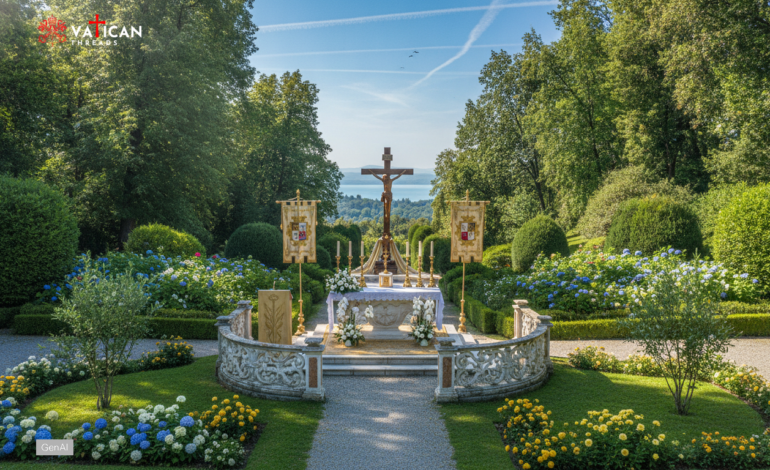
According to available reports, Pope Leo XIV will celebrate a Mass for the Care of Creation at Castel Gandolfo, connecting the liturgy to themes associated with Laudato si and ongoing formation in parishes and schools, as detailed in Pope to Celebrate Mass for the Care of Creation at Castel Gandolfo. While this Mass is not the consistory itself, it can be read as a signal of what Vatican messaging is emphasizing publicly, according to that report. Readers comparing how institutions communicate priorities through symbolic settings may also note this unrelated example, Xi Jinping Middle East peace call urges diplomacy, when thinking about how messaging travels beyond immediate audiences. The practical takeaway is that visible pastoral messaging often runs alongside governance and administration, which helps explain why interest extends beyond internal procedure.
Why the consistory matters for leadership
In Vatican terms, a consistory is closely watched because it can affect leadership pipelines and the Church’s capacity to sustain long-term priorities, though the specific agenda depends on what is officially announced. In this cycle, some observers are cautiously asking how the pope leo xiv consistory might reinforce commitments that have been emphasized in preaching and in public liturgies, including integral ecology and social solidarity, without assuming any particular outcome in advance. Governance decisions influence whether dioceses and Vatican offices have leaders aligned with those priorities, and whether initiatives are implemented consistently rather than episodically. For a clear explainer on the mechanics and stakes, see Pope Leo XIV consistory: what it is and why it matters, and for reporting on related remarks and framing, see Pope Leo XIV consistory: what was said at Rimini.
How appointments connect to charity and ecology priorities
When leadership priorities are translated into budgets, personnel, and local implementation, appointments can become a hinge point for continuity. Reporting has highlighted concrete solidarity work alongside the current messaging cycle, including support coordinated through the Papal Almoner’s Office, as covered in Papal Almoner’s Office supports solidarity kitchen in Ukraine. The relevance to Vatican governance is institutional: leaders chosen or affirmed through formal processes may strengthen—or weaken—the Church’s ability to scale efforts across dioceses, depending on mandates and follow-through. The same is true for ecological initiatives in Catholic schools, religious houses, and parishes, where energy use, water stewardship, and local resilience projects typically require continuity and competent oversight. Read in that light, the pope leo xiv consistory is one of the moments analysts watch for clues about how durable these priorities may become.
What to watch next after the consistory
After a consistory, readers typically watch for follow-up signals: how new or reaffirmed leaders speak, what offices publish as priorities, and how papal travel and pastoral events reinforce (or complicate) the governance direction. Vatican coverage has also pointed to broader Church engagement and upcoming coordination, including youth and local preparations in places expecting the pope, as in Young volunteers in Peru prepare to welcome Pope Leo. In parallel, the Castel Gandolfo Creation Mass frames ecology as ordinary discipleship rather than a niche campaign, at least as Vatican News presents it, and governance choices can influence whether that framing becomes measurable practice. The immediate question is consistency: whether structures, staffing, and diocesan priorities align with the themes highlighted publicly. That is why the pope leo xiv consistory remains a focal point for understanding what may come next.
2 Comments
[…] Pope August 25, 2026 […]
[…] Today the devotional focus is described by Vatican News as centering on a Roman basilica associated with receiving the relics and continuing to host prayer and commemorations tied to Monica’s witness. The report describes how pilgrimage patterns can form around accessible sites where the faithful connect liturgy, memory, and catechesis without sensationalism, and Saint Monica relics are presented as a reference point for preaching on conversion and perseverance. In this setting, the relics are presented as a reference point for preaching on conversion, perseverance in family life, and confidence in prayer, especially in connection with Augustine’s conversion narrative as commonly told in Church tradition. Practical guidance for visitors is generally communicated through official channels and local custodians rather than rumor, and related Vatican reporting on how Rome schedules and communicates major Church moments can be found in Pope Leo XIV Consistory: Details and Timeline. […]