

Saint Monica relics: discovery and significance
Saint Monica relics have become a renewed point of attention in Rome as Vatican News revisits its account of a translation of remains linked to Monica, the mother of Saint Augustine. In that telling, the emphasis is on Church-supervised handling and public veneration described as relying on documentation and custody rather than on legend, and Saint Monica relics are presented as requiring careful identification and safeguarding. As presented by Vatican News, custodians describe the relics as a sign of continuity with early Christian witness and pastoral memory. The report indicates why identification, safeguarding, and responsible presentation are considered important to the faithful. The focus remains on accountable stewardship as described in the report: who held responsibility, how access was controlled, and how the relics were received in a way intended to support devotion, catechesis, and prayer within established Catholic practice.
Relics of Saint Monica and the Augustinian friars
Vatican News places the Augustinian friars at the center of the work that enabled the translation, describing their role in safeguarding the remains and coordinating their liturgical reception. Their stewardship is presented as both devotional and administrative, since relics are typically handled with documented custody, controlled access, and public accountability within Church norms. The report also says these relics drew special attention because of their association with Augustine’s story and the Order’s spiritual identity in Rome. For a separate example of how public interest can shift around sensitive topics, see NFTs Market Overview: Trends, Liquidity, and Risks, though the Church’s handling in this case is described as being governed by canon practice rather than by market dynamics. Overall, the friars’ role is framed by Vatican News as custody, documentation, and orderly veneration.
Relics linked to Monica and papal permissions
The translation is framed in the Vatican News feature as an ecclesial act requiring authorization, not simply a local initiative. Vatican News connects the process to Pope Martin V, presenting his involvement and permissions as relevant to proceeding in a way that, according to the report, respected Church authority and public devotion. Within that framework, the handling of the remains is presented as a matter of governance as much as piety, since papal assent is described as shaping where relics may be kept and how they may be honored in public worship. Vatican News details this papal involvement in its feature, The adventure of the translation of the relics of St Monica, emphasizing permissions, procedure, and the pastoral intent behind the decision as it recounts it. The point, as presented there, is legitimacy, unity, and responsibility in Rome.
Saint Monica relics in Rome today: location and pilgrimage
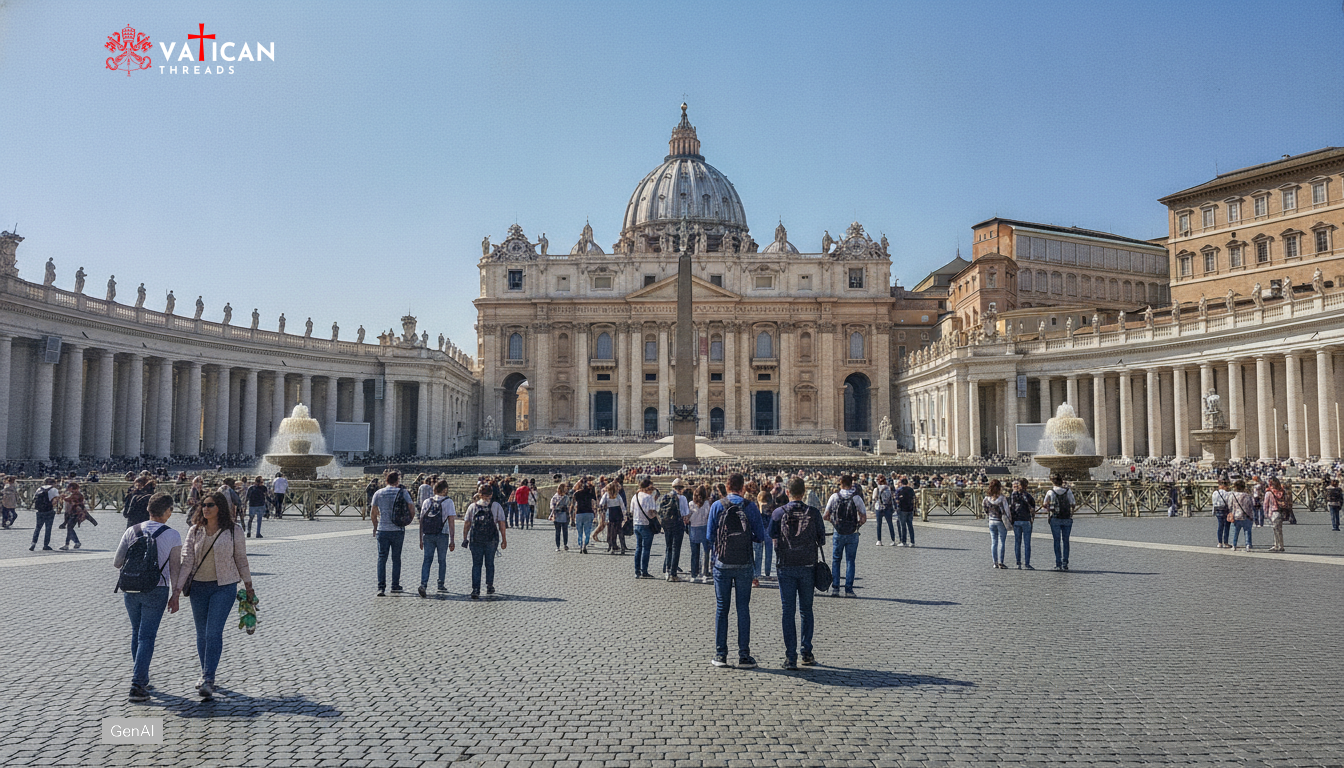
Today the devotional focus is described by Vatican News as centering on a Roman basilica associated with receiving the relics and continuing to host prayer and commemorations tied to Monica’s witness. The report describes how pilgrimage patterns can form around accessible sites where the faithful connect liturgy, memory, and catechesis without sensationalism, and Saint Monica relics are presented as a reference point for preaching on conversion and perseverance. In this setting, the relics are presented as a reference point for preaching on conversion, perseverance in family life, and confidence in prayer, especially in connection with Augustine’s conversion narrative as commonly told in Church tradition. Practical guidance for visitors is generally communicated through official channels and local custodians rather than rumor, and related Vatican reporting on how Rome schedules and communicates major Church moments can be found in Pope Leo XIV Consistory: Details and Timeline.
Legacy of Saint Monica and what the relics signify
Vatican News presents the renewed telling of the translation as a way to connect historical memory with present pastoral priorities. Monica’s legacy is consistently portrayed in preaching and catechesis as disciplined prayer, patient endurance, and trust in God amid family conflict, themes that remain central to devotion in Rome. In the narrative, the physical remains are not treated as an end in themselves, but as an aid to devotion that points beyond the material to the life of holiness it represents. The Church’s approach is described as stressing continuity with the saints and careful, lawful stewardship of what is offered for veneration; for wider context on Vatican discussions that pair tradition with contemporary questions, see Church response to AI: Filipino theologians lead. In this way, the translation story is presented as reinforcing how devotion is guided by authority, documented custody, and the ordinary life of prayer.