


Vatican’s Focus on AI and Communication
Officials and scholars meeting in Rome are treating synthetic media as an immediate communications risk, not a distant theory. Today, Vatican communicators are balancing speed with verification as generated audio and video spread across platforms. In that context, the AI Conference Vatican is being framed as a practical response to protect credibility while serving pastoral needs. Speakers tied the work to vatican AI priorities that stress human dignity and transparency in public messaging. Live monitoring of misinformation trends has become routine for many press offices, and the Vatican wants shared standards that can be applied in multiple languages. The first Update from organizers emphasized that ethical guidance must be usable by editors, educators, and clergy.
Details of the Urbaniana University Event
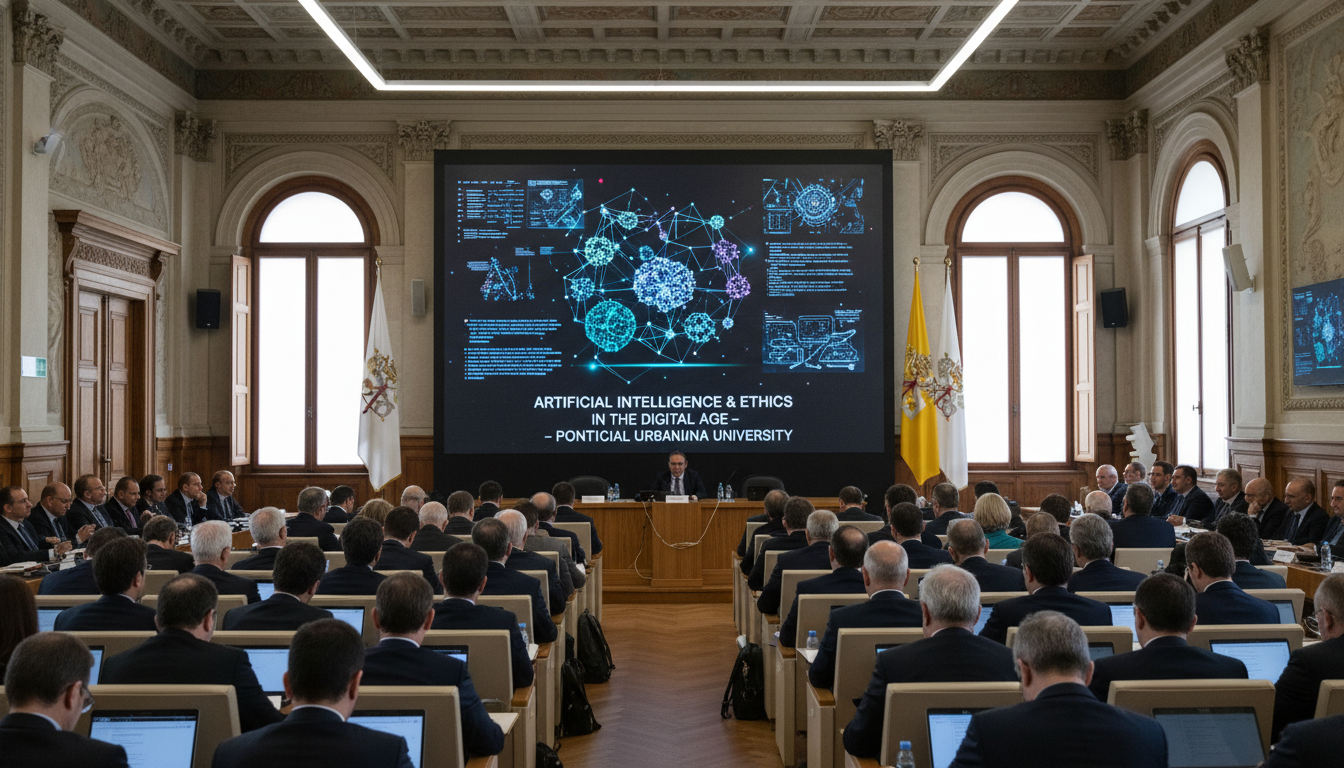
The gathering is hosted at Urbaniana University and centers on the theme of preserving human voices and faces in an age of powerful generative tools. Today, panels are running in rapid sequence so participants can compare newsroom workflows with academic research on authentication and consent. The Vatican News report Preserving Human Voices and Faces conference coverage describes the conference as an international forum supported by the dicastery communication network. A related policy angle is covered in WhatsApp rolls out incognito chat privacy for AI, which highlights how product design can change what users expect from privacy. Live briefings between sessions are being used to circulate a rolling Update on key takeaways for Catholic media offices.
Key Discussions and Presentations
Sessions focus on how identity can be compromised when a familiar face or voice is convincingly replicated, and what institutions can do immediately to reduce harm. Presenters described verification routines that treat consent, provenance, and contextual labeling as inseparable, aligning that operational approach with dicastery communication responsibilities. The AI Conference Vatican was referenced as a testing ground for whether guidance can be turned into checklists that editors actually follow under deadline pressure. Today, several speakers stressed that training must be continuous because model capabilities are changing month by month. An internal perspective on Vatican public messaging standards is also echoed in Pope Leo XIV calls books a path to peace today, which notes the value of careful language in public life. Live notes circulated by attendees offered an Update on recommended safeguards for diocesan channels.
Implications for Catholic Doctrine and Communication
Participants linked the technical problem of deepfakes to longstanding doctrinal concerns about truthfulness, scandal, and the moral weight of public testimony. Rather than treating manipulation as only a legal issue, speakers argued it can distort a person’s reputation and community trust, especially when sacraments, catechesis, or sensitive pastoral moments are recorded. Today, workshop examples examined how synthetic impersonation could mislead the faithful if a forged clip appears to show a bishop endorsing a false claim. The conference emphasized that robust attribution practices must be part of dicastery communication guidance and seminary media formation. Live demonstrations were used to show how watermarking and content credentials can fail if distribution chains strip metadata. A mid day Update urged dioceses in Rome to keep auditable archives of original recordings.
Future of AI in Religious Contexts
The closing sessions turned to governance, with calls for institutions to document how AI systems are selected, tested, and audited before they touch public communications. The AI Conference Vatican was cited as a starting point for shared Catholic norms on disclosure when synthetic assistance is used in translation, image editing, or voice enhancement. Today, participants emphasized that pastoral effectiveness cannot excuse shortcuts that blur the line between authentic testimony and fabricated content. Vatican AI priorities were described as compatible with innovation when human agency remains visible and accountability is assigned to named offices. Live collaboration proposals included cross diocesan incident reporting so lessons travel quickly when impersonation attempts occur. The final Update from moderators stressed that protecting faces and voices is also about protecting the credibility needed for evangelization.