




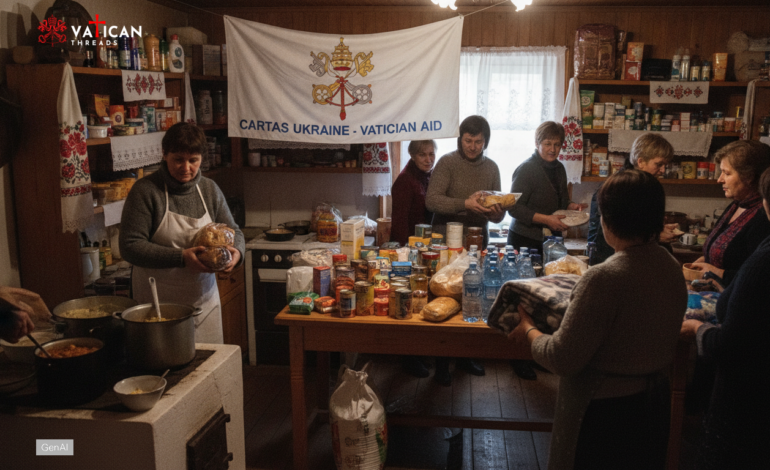

Vatican aid to Ukraine: how the solidarity kitchen works
As the war continues to disrupt daily life, Vatican aid to Ukraine is being directed into practical services intended to help families access food and basic support. Operationally, this type of support can alleviate the burdens faced by households. Where programs track results, the outcomes may include meals served and basic goods distributed, as reported by Vatican News coverage of the solidarity kitchen support, although exact totals are not provided in the article. Rather than one-time gestures, this assistance is described as focusing on projects that can operate day to day through local partners who are closer to affected neighborhoods. By concentrating on steady delivery, Church-backed assistance may help reduce gaps that can emerge when households are displaced or income decreases.
The Papal Almoner and Dicastery for Charity
The Papal Almoner operates under the Dicastery for Charity, coordinating resources designated by the Pope for people facing hardship. The effort is described as focusing on projects that can operate day to day through local partners who are closer to affected neighborhoods. In August 2026, Vatican News coverage of the solidarity kitchen support described backing for a solidarity kitchen serving those affected by the war in Ukraine. According to Vatican News, the effort is presented within the almoner’s mandate to translate papal charity into material assistance through local partners tasked with identifying needs and distributing aid.
Vatican support for Ukraine and its impact on local communities
For communities under strain, a solidarity kitchen can help support daily routines by offering a reliable meal and a place for human contact. Related context on Ukraine can be followed in UK support for Ukraine: Burnham rejects Russian threats, alongside the Vatican News account of the initiative. Vatican support for Ukraine is most visible when assistance is tied to regular opening hours, predictable supplies, and volunteers who can keep serving even when transportation or utilities are disrupted. According to the Vatican News account, the model links funding to a working site and describes outputs such as meals served and people reached, without publishing comprehensive figures.
This type of support can ease pressure on households that might otherwise have to choose between food, rent, and medical costs. In August 2026, the initiative is described as centered on a solidarity kitchen model serving those affected by the war in Ukraine. It may also enhance social cohesion by giving displaced people a setting to reconnect with neighbors and local parish networks. In practice, the kitchen can function as a steady point of contact where visitors may learn about other forms of help, including parish-led support, depending on what local organizers can provide.
Father Viktor Bilous and on the ground coordination
Father Viktor Bilous is presented by Vatican News as a key figure connected to the initiative, linking pastoral care with the practical organization required to keep a kitchen running. Additional perspective on Church coordination appears in Catholic media evangelization grows among Tanzania nuns, alongside the Vatican News framing of local coordination. In that framing, Vatican aid to Ukraine is described not as an abstract transfer but as support that relies on local leadership and day-to-day decisions about purchasing and distribution. As summarized by Vatican News, Bilous’ role highlights how clergy and lay volunteers coordinate procurement, cooking, and access for recipients while aiming to respect the dignity of those who come for help.
What comes next for Vatican aid to Ukraine
The August 2026 Vatican News reporting presents the support as part of an ongoing charitable pathway. It suggests a preference for initiatives that combine immediate relief with longer-term resilience, such as maintaining supply chains and supporting volunteers, where feasible. For related Vatican developments, see Pope Leo XIV Consistory: Details and Timeline and Pope Leo XIV’s Visit to Metz: A Sign of Cross-border Friendship as additional context. Based on how Vatican News frames the kitchen initiative, further solidarity efforts may continue to favor projects tied to stable community hubs such as parishes and charitable centers, where organizers can oversee distribution. In that forward-looking view, Vatican aid to Ukraine may continue to be associated with practical, repeatable services that communities can keep running day to day through local partners.