
Missile Strikes in Iraqi Kurdistan Raise New Fears for Ancient Christian Community
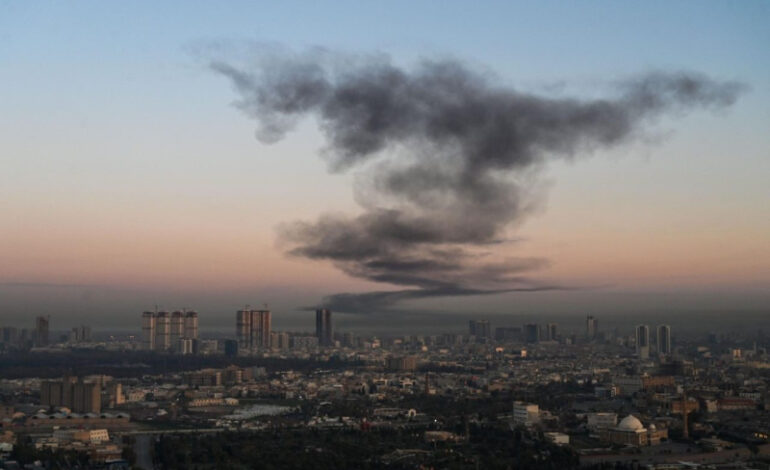

Missile and drone activity in the Kurdistan region of Iraq has raised alarm among residents after debris from intercepted projectiles struck buildings belonging to the Chaldean Church in the Christian district of Ankawa in Erbil. The incident occurred during a week of heightened tensions across the Middle East as Iranian operations targeting Kurdish groups expanded near the region. Although Iraqi Kurdistan is not directly involved in the broader confrontation involving Israel, Iran and allied forces, local residents say the territory has become vulnerable due to its geographic position and the presence of various international and regional actors operating nearby.
According to local accounts, a series of explosions were heard in Erbil on Wednesday evening when air defense systems attempted to intercept incoming missiles and drones. Residents reported hearing between ten and twenty blasts as projectiles were intercepted above the city. Debris from the interception fell into Ankawa, a predominantly Christian suburb located near Erbil International Airport where a United States military facility is based. Some of the falling debris struck residential buildings associated with the Chaldean Church and landed close to a convent housing members of the Chaldean Daughters of Mary Immaculate. No casualties were reported, though the explosions caused structural damage and alarm among residents.
Community members described the attack as particularly unsettling because the current conflict has no clearly defined front line. Unlike previous wars in the region where fighting was concentrated in specific areas, missile and drone strikes can occur with little warning across large distances. Ankawa has become the largest Christian neighborhood in Iraq and one of the most significant Christian communities remaining in the Middle East. Its proximity to strategic infrastructure such as the international airport and military installations has increased concerns among residents that the district could face further risks if regional tensions continue to escalate.
Local community leaders say the situation reflects the difficult position of Iraqi Kurdistan which often finds itself caught between competing geopolitical interests. Although Iraq itself is not a participant in the wider confrontation, the region hosts various groups and international stakeholders that make it vulnerable to retaliation and cross border military operations. Kurdish groups with connections to Iran operate within parts of Iraqi Kurdistan, and these groups have recently been targeted by missile strikes originating from across the border. As a result civilians living nearby have found themselves exposed to the consequences of conflicts that are not directly connected to their own communities.
For Iraq’s Christian population the renewed violence has revived deep concerns about the survival of one of the world’s oldest Christian traditions. Over the past several decades the country’s Christian population has declined dramatically due to wars political instability and persecution. Estimates suggest that roughly ninety percent of Iraqi Christians have left the country during the last quarter century. Today only around one hundred thirty thousand Christians remain among a national population of more than forty million people. Many belong to ancient communities that still preserve the Aramaic language and traditions that date back to the earliest centuries of Christianity.
Local advocates warn that continued instability could accelerate the decline of this historic community. Many Christian families who remained after earlier conflicts now face renewed uncertainty as regional tensions spread across Iraq and neighboring countries. While daily life continues in Erbil with businesses open and residents going about their routines, many people are anxiously watching developments in the region and wondering how the situation might evolve. For the Christians of Ankawa and other communities across Iraq the greatest fear is that ongoing conflict may further weaken their presence in the land where their faith has existed for nearly two thousand years.