

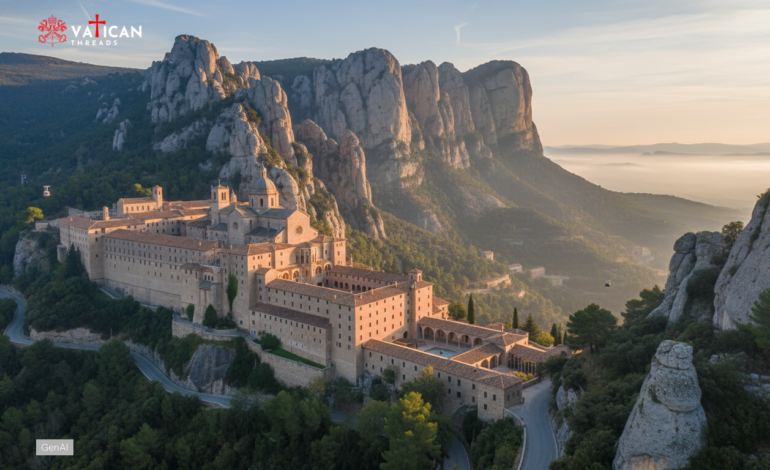

Pope Leo XIV Montserrat Visit: Arrival at Montserrat Abbey
Pope Leo XIV arrived at Montserrat Abbey with a pastoral program centered on prayer and encounter. According to Vatican News in June 2026, he urged listeners to nurture love so hatred can give way to peace, framing the moment as a concrete appeal to reconciliation. The basilica and monastery setting kept attention on worship rather than ceremony, and Pope Leo XIV Montserrat themes were presented as an occasion for interior conversion that can shape public life without turning faith into a slogan. Local Catholic representatives attended the liturgy alongside the monastic community, and the Pope’s words were delivered as a direct exhortation to choose mercy in relationships and civic discourse.
Why Montserrat Matters in Catholic Tradition
Montserrat’s role in Catholic devotion shaped how the Pope spoke, emphasizing prayer that forms conscience and social responsibility. Vatican News described the visit in the context of devotion to the Virgin of Montserrat and the monastery’s long rhythm of liturgy and hospitality. In that setting, the Pope drew attention to silence and contemplation as tools for resisting cycles of resentment. Related reporting on Church and public responsibility, including EU budget 2027: Commission floats €200bn plan, appeared alongside broader civic topics, showing how faith leaders address complex social realities without reducing them to partisan lines. The focus remained pastoral, calling believers to let devotion translate into patient peacemaking.
Homily Themes at Montserrat: Love, Peace, and Reconciliation
The Pope’s core message highlighted reconciliation as an active choice rather than a feeling, and Vatican News quoted him warning against letting hatred set the terms of life together. The Montserrat setting reinforced the theme, where prayer is sustained over time rather than driven by news cycles; Vatican News report on the Montserrat homily details the appeal to replace hostility with concrete gestures of peace. He framed love as a discipline that starts with attention to the vulnerable and extends into the way communities speak about opponents. For additional context on his wider priorities in Spain, Pope Leo XIV Consistory Signals Spain Visit Priorities traces themes that reappeared at the abbey.
Benedictine Community Reactions: The Gift of Silence
Within the monastery, reactions emphasized gratitude for a papal focus on prayerful stability and the human work of listening. Vatican News reported Pope Leo XIV thanking the monks for the gift of silence, a phrase that resonated with Benedictines who organize their day around common prayer and attentive labor; Pope to Benedictines in Montserrat: Thank you for the gift of silence expands on the exchange. For readers following how papal decision making shapes these moments, Pope Leo XIV Consistory: What It Is and Why It Matters provides background on the wider Church context. Observers in the abbey community described the visit as affirming their vocation as a quiet witness that can soften social polarization through hospitality.
Lasting Impact of the Visit on Local Catholic Life
The visit’s immediate impact was rhetorical but precise, positioning peace as a craft learned through prayer, restraint, and truthful speech. Vatican News portrayed the Pope’s intervention in June 2026 as a reminder that religious communities can serve the public good by forming people who refuse dehumanization. Clergy and lay leaders present took the message as encouragement to invest in reconciliation initiatives that begin locally and resist ideological sorting. The Pope’s appeal also reinforced the monastery’s public profile as a place where spiritual practice meets social concern without spectacle. While no new institutional programs were announced in Vatican News coverage, the emphasis on love over resentment provided a clear yardstick for Catholic communities assessing their own tone and priorities. The lasting measure will be whether parishes and institutions translate the homily’s moral clarity into sustained habits of encounter and repair.