



Pope Leo XIV in Lampedusa: purpose and message
Pope Leo XIV is preparing to travel to Lampedusa with a pastoral focus on people arriving after dangerous sea crossings. As indicated by available reports from early July 2026 interviews published by Vatican News, the trip is framed by aid agencies as a moment to foreground the human dimension of migration rather than abstract policy debates. The International Organization for Migration said the stop is expected to prioritize listening to survivors, local responders, and Church workers who meet arrivals at the shore and in reception settings. Vatican officials have not presented the journey as a diplomatic summit, but Lampedusa’s role as a frontier of Europe gives the visit political weight for Italian and European leaders.
Conditions in Lampedusa: rescues, arrivals, and the hotspot
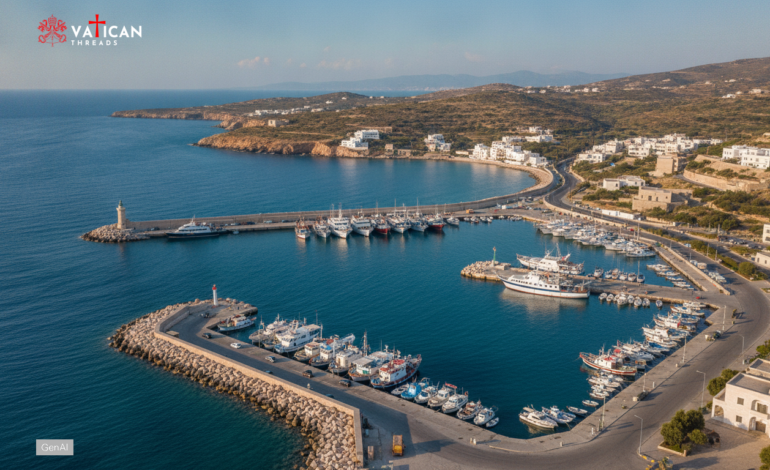
Operational pressure remains concentrated on the Central Mediterranean route, where rescues, disembarkations, and reception capacity collide daily on small islands. Vatican News reporting on conditions inside Lampedusa’s reception facility, described as a “hotspot,” notes a system designed for short stays that is frequently stretched by fluctuating arrivals and transfer delays; for background, see Inside Lampedusa’s “hotspot”. Humanitarian actors emphasize safeguarding, medical triage, and clear information for new arrivals, while local services try to prevent bottlenecks that can heighten vulnerability and tension. In that setting, the Pope’s stop on the island will be read against day-to-day realities at the border.
IOM and UNHCR on the Pope Leo XIV Lampedusa visit
International agencies are using the Pope Leo XIV Lampedusa visit to restate accountability standards for states and regional bodies. In a Vatican News interview dated July 2026, IOM emphasized that the trip will highlight the human dimension of migration and the need for humane reception and protection at borders; see IOM: Pope Leo’s Lampedusa visit will highlight human dimension of migration. UNHCR, also in a July 2026 Vatican News interview, framed the visit as a call for shared responsibility, linking rescue at sea, access to asylum procedures, and predictable relocation mechanisms; see UNHCR: Pope Leo’s Lampedusa visit a call for shared responsibility. As a separate policy example of shared responsibility between institutions, see MiCA deadline in the EU: crypto user migration test.
Church response: human dignity, safeguarding, and governance
Church agencies are positioning the papal stop in Lampedusa as a test of credibility for a message rooted in human dignity and concrete accompaniment. In its ongoing work, the Vatican’s Dicastery for Promoting Integral Human Development coordinates reflection and partnerships that extend beyond Italy, including support for Church networks that provide shelter, legal orientation, and trauma care; see Dicastery for Integral Human Development: Smerilli Named. Local parishes and religious communities around Sicily are expected to amplify that approach during the visit, focusing on protection for minors, family unity, and dignified reception practices, alongside training and safeguarding standards; see Safeguarding minors: Missionaries of Africa training. The Vatican’s wider governance signals under Pope Leo XIV also shape how this moment is read; see Vicariate of Rome Constitution Revised by Pope Leo XIV.
What the visit could change for Italy and Europe
The immediate impact will be measured less by new agreements and more by whether the trip resets the public conversation around protection and governance. Vatican News has suggested that the Pope is expected to emphasize connections between pastoral gestures and ethical criteria, drawing attention to lives at risk and to the responsibilities of institutions that control borders. The Holy See’s broader pattern of interventions on humanitarian law and civilian protection suggests the Pope will keep emphasizing standards rather than slogans; see Holy See humanitarian law call to protect Gaza aid. In that context, the Pope Leo XIV Lampedusa visit could become a reference point for Catholic organizations negotiating access to reception centers and for local administrations seeking consistent support from Rome and Brussels. Italian officials and European partners will be judged on whether commitments translate into humane reception, timely transfers, and lawful procedures.