
What changed in the Pope’s plot
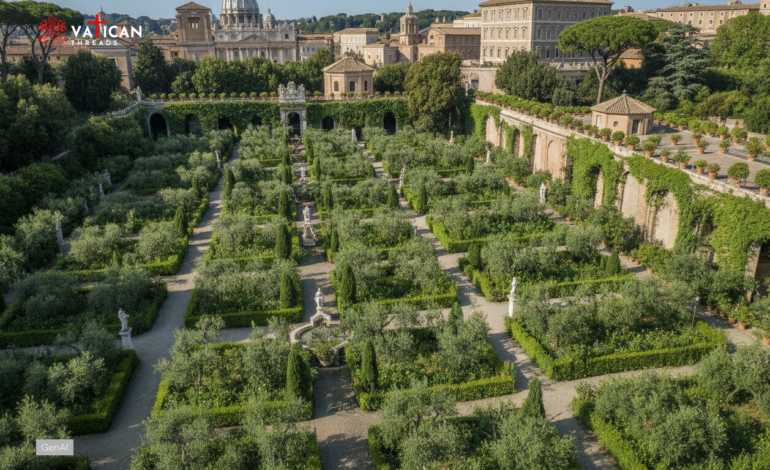
The Vatican is formalizing an environmental shift inside its own walls by making the Pope’s garden fully organic. According to Vatican News, the garden is said to have become “100% organic,” and the change is framed as day-to-day management of soil inputs, pest control, and seasonal cultivation rather than a symbolic gesture. The report’s “100%” wording suggests a comprehensive approach, even if operational details are not fully enumerated in the article. In practice, this can mean decisions about fertilizers and treatments are handled consistently from one growing season to the next, and any claims about tracking or verification would depend on what the Vatican Gardens choose to publish over time. The move also makes the Vatican Gardens’ productive areas a visible reference point for how church institutions can align stewardship with daily operations, as described by Vatican News.
Why it fits the Gardens’ history
The shift matters because the Vatican Gardens have long combined ceremonial spaces with working horticulture managed by specialized staff and controlled access, as generally described in Vatican coverage of the site. Vatican News presented the organic transition as a development inside an established system where maintenance follows strict schedules and planning. That continuity helps explain why the Pope’s plot could function as a test bed without disrupting the broader landscape, although Vatican News did not spell out operational constraints in detail. For context on the announcement and its framing, see Vatican News report on the Pope’s garden turning 100% organic, and a related view of how sustainability rules can become contested beyond Vatican City appears in US-EU Tensions Boil Over EU Sustainability Rules. The move is positioned as an incremental operational update rather than a redesign of the Gardens’ public-facing identity.
How the “100% organic” standard is put into practice
Moving from partial to complete organic management typically requires clear rules for procurement, pest control, composting, and soil inputs, because exceptions can undermine “100%” claims. Vatican News reported that the Pope’s garden is said to be 100% organic, but it did not publicly list every procedure used to reach that status. In a setting as visible as Vatican City, the step may also require staff training, logs for inputs, and repeatable routines that can be checked across seasons; however, those implementation details are best treated as standard operational needs rather than confirmed Vatican policy unless the Holy See publishes documentation. This change is also a communications challenge, since the claim must match practice in difficult conditions such as pests, heat, or soil fatigue, which can affect any garden; for how Vatican reporting often ties operational choices to pastoral priorities, see Palm Sunday Mass 2026 coverage. A practical benchmark here is whether input routines remain consistent after the initial announcement cycle.
Laudato si’ and the message
The organic decision is also being read through the lens of Vatican teaching on ecology, particularly Laudato si’, which calls for integrating care for creation into institutional behavior. Vatican News linked the garden shift to that moral framework by presenting it as a concrete step taken inside the Vatican Gardens, not only a distant appeal aimed at governments or consumers. The Laudato si’ emphasis on “integral ecology” is often discussed in abstract terms, but the Pope’s garden offers a more observable case where inputs, cultivation decisions, and outcomes could be monitored over time if data is shared; for another example of Vatican News reporting that connects place and practice in church life, see Vatican News on the La Vang shrine pilgrimage. The credibility of any sustainability message here depends on maintaining standards after the headlines fade, consistent with the expectations created by Vatican News’ “100% organic” phrasing.
What could change next
Vatican sustainability efforts gain a clearer reference point when a defined area adopts a strict operational standard that can be explained, monitored, and repeated. While Vatican News did not present the Pope’s plot as a universal blueprint for every Vatican unit, it could still function as a model for land management and procurement practices that other church properties study, especially within Vatican City’s Vatican Gardens operations. Used carefully, the Vatican organic garden label in a high-profile setting may also encourage dioceses and religious houses to evaluate pesticides, fertilizers, and labor practices in ways that match pastoral messaging, though any broader impact would depend on local resources and leadership decisions. Related Vatican reporting on how events inside the Holy See are managed under pressure can be seen in Pope Leo XIV Vatican Apartment: Quake Response. The practical next step is consistent reporting on methods and outcomes, not celebratory language.