
Interreligious dialogue and Koovakad’s call to fraternity
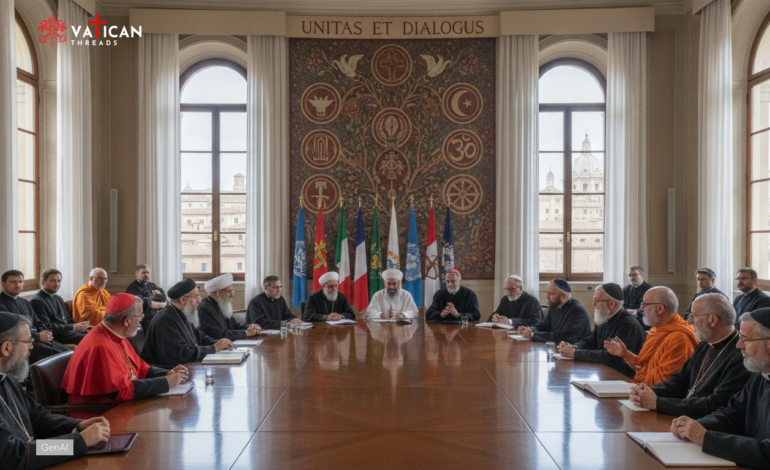
Interreligious dialogue was the practical lens Cardinal George Jacob Koovakad used to describe fraternity as a concrete social duty rather than a slogan. In remarks published by Vatican News in June 2026, he argued that communities can shape public life without erasing real differences, provided conscience is respected and truth is spoken plainly. He expressed that mutual recognition grows when encounters are patient, honest, and sustained, not occasional gestures, and he framed interreligious dialogue as the work of ordinary relationships. Koovakad encouraged pastors and lay leaders to treat meeting other believers as a normal part of mission. His emphasis stayed rooted in daily habits of listening, joint service, and responsible speech, especially when political identity and religious identity are being fused in ways that exclude neighbors.
Why interreligious dialogue matters in a fragmented world
Koovakad linked fraternity to peacemaking in conflicts that are simultaneously political, economic, and cultural, where communities are pulled into camps that feel permanent. As reported by Vatican News, Cardinal Koovakad: the concept of fraternity is not utopian idea, he described fraternity as reachable through steady contact and shared responsibility. A wider context piece, Global crises persist in Europe, Africa and Middle East, reinforced why he treats the theme as urgent and why interreligious dialogue is presented as a practical civic tool. For a parallel example of how durable public frameworks can lower tension, see Energy contracts in Portugal aim to steady prices.
Institutions that support interreligious dialogue
Koovakad placed religious traditions at the center of civic repair, arguing that they carry moral memory that can restrain revenge cycles and protect minorities. He described the dicastery for interreligious dialogue as a service that helps local churches and partners translate encounters into cooperation, continuing the work of the former pontifical council after the Roman Curia reforms. Related Vatican reporting on clarity in ministry and mandates appears in Vatican Dicastery maintains that a layperson cannot deliver the homily, and further background is discussed in Vatican Dicastery Armin Luistro on Homily Limits. Inside the Church, he linked credibility to clear roles and competent formation so that engagement does not drift into confusion.
Challenges that weaken interreligious dialogue
Koovakad cautioned that interreligious dialogue could weaken if it becomes a superficial measure rather than a genuine effort to address injustice. He mentioned that durable engagement requires clarity about beliefs and transparent goals, or else distrust grows and extremist actors claim the space. Church governance issues also shape the environment in which dialogue happens, including how leadership moments are scheduled and communicated, as noted in Pope Leo XIV Consistory timetable set by Vatican. He also pointed out the problem of fragmented information ecosystems, where misquotes and edited clips can sabotage relationships built over years. In his perspective, this makes training and accountability essential, so local leaders can correct false narratives quickly and keep channels open after a crisis.
Future directions for interreligious dialogue and fraternity
Looking ahead, Koovakad indicated that fraternity might advance through persistent local initiatives rather than one-off international gestures, especially where neighborhoods are religiously mixed and politically tense. He pointed to Nostra Aetate as a continuing reference point, not a museum text, because it sets expectations for respect, collaboration, and rejection of hatred directed at any group. He encouraged dioceses and partner communities to invest in training that joins theological literacy with conflict sensitive communication, and he described interreligious dialogue as the practical setting where those skills are tested, so leaders can defuse incidents before they become communal crises. He also emphasized that measurable cooperation, such as shared humanitarian work and joint condemnation of violence, builds credibility over time. His approach treats trust as an asset that must be protected.